10 Nonnegotiable Construction Document Management Software Features to Look For
Construction document management software isn’t for storage alone. Its role is to ensure information travels seamlessly between people and the project.
On any job, documents rarely follow a straight path. Every drawing, specification, approval, and revision moves through multiple hands long before it reaches site. Some are reviewed quickly, others change direction, and many resurface months later when questions are raised or details need to be confirmed.
That’s why modern construction document management software has become less about where files live and more about how information is introduced, collaborated on, and managed as projects evolve.
Documentation misalignment is rarely obvious until work is underway
On site, documentation disputes do occur from missing files, but more often, they come from a lack of visibility and consistency.
When document sharing and reviews take place across multiple tools and channels, the status and progress is near impossible to keep track of. Standards are harder to enforce, ownership becomes unclear, and context can drift as files are revised and reissued.
Over time, confidence erodes and the impact is usually visible in areas like:
- Budget Bloating: Budget overruns caused by rework, incorrect quantities, or late design clarifications.
- Construction Delays: Delays when teams pause work to confirm the right information.
- On-Site Rework: Costly rework on site due to outdated drawings or superseded details being used.
- Variation Claims: Increased variation claims when scope changes aren’t clearly tracked or communicated.
- Team Disputes: Disputes between teams over responsibility, approvals, or which version was issued.
- Loss of Trust in Documentation: Loss of trust in documentation leading teams to double-check, print, or bypass systems entirely.
These aren’t people problems. They’re process problems, created when systems capture files, but don’t unify the entire documentation process.
Document management software should take on responsibility
Construction document management software should take responsibility for how information is prepared before it’s shared, how it moves while work is underway, and how it holds up when it’s revisited later. After all, documents aren’t only used once. They’re checked, referenced, questioned, and relied on at different points in time, sometimes by people who weren’t involved when they were first created.
That places a clear responsibility on the software itself. It needs to facilitate smooth handover between contributors, orchestrate how work moves forward, and preserve an audit trail over time.
At a minimum software should be responsible for:
- Document Attributes: Ensuring new documents meet project standards before they enter circulation.
- Review Visibility & Record: Full visibility of review activity as it happens, with a complete, traceable record retained over time.
- Document Advancement Controls: Clear rules governing when documents can progress, be issued, or withheld.
- Submission Handling: The handling of incomplete, rejected, or superseded items within active submissions.
- Format & Version Relationships: The relationship between different formats and versions of the same document.
These capabilities are not optional enhancements. They're the controls that determine whether a process holds together or unravels under pressure.
Construction Document Management Software
Key functionality to look for in your next system
Construction Document Management Software

Document status is displayed in a single view. Items are shown as waiting for review, under review, sent back, approved, or rejected, along with ownership and due dates. Status is maintained at the document level as changes are made, rather than restarting with each revision.
Required review and approval steps are enforced before documents can be issued. Completed documents within a package are released independently, without being held back by items that require further input.
Naming conventions, metadata, and required fields are enforced at upload. Documents can't move forward until mandatory information is provided, ensuring files enter the register in a consistent and controlled format.
Attributes are defined at an organisation level and applied at a project level. The document register reflects only the attributes selected for the project, and uploads are validated against them.
A common data environment brings all shared project information into one system. Documents, communications, reviews, approvals, and related records are viewed and managed in a single location, establishing one source of truth for project data.
A complete audit trail is captured for each document. All uploads, revisions, review actions, approvals, and supersessions are recorded with timestamps and ownership, providing a clear record of what occurred and when.
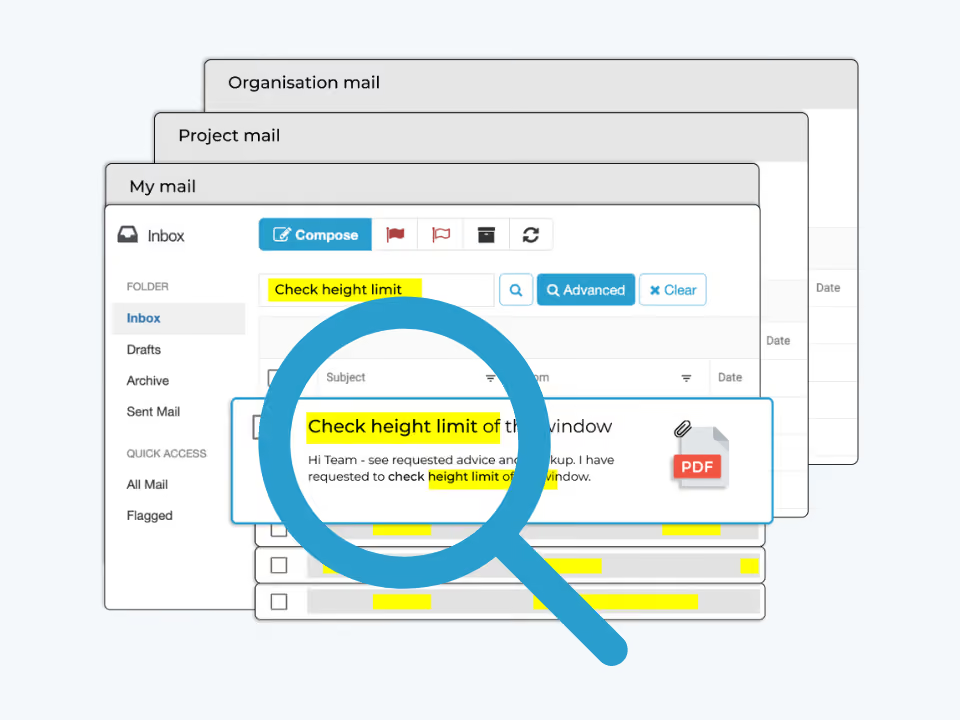
Comments, markups, and discussion threads are captured directly against the document. All review input remains attached to the file record it relates to.

A private workspace supports document preparation. Files are uploaded, grouped, with the option to OCR-process. Documents can then be validated against the Information Delivery Plan (IDP) before being reviewed, refined, and released to the CDE.
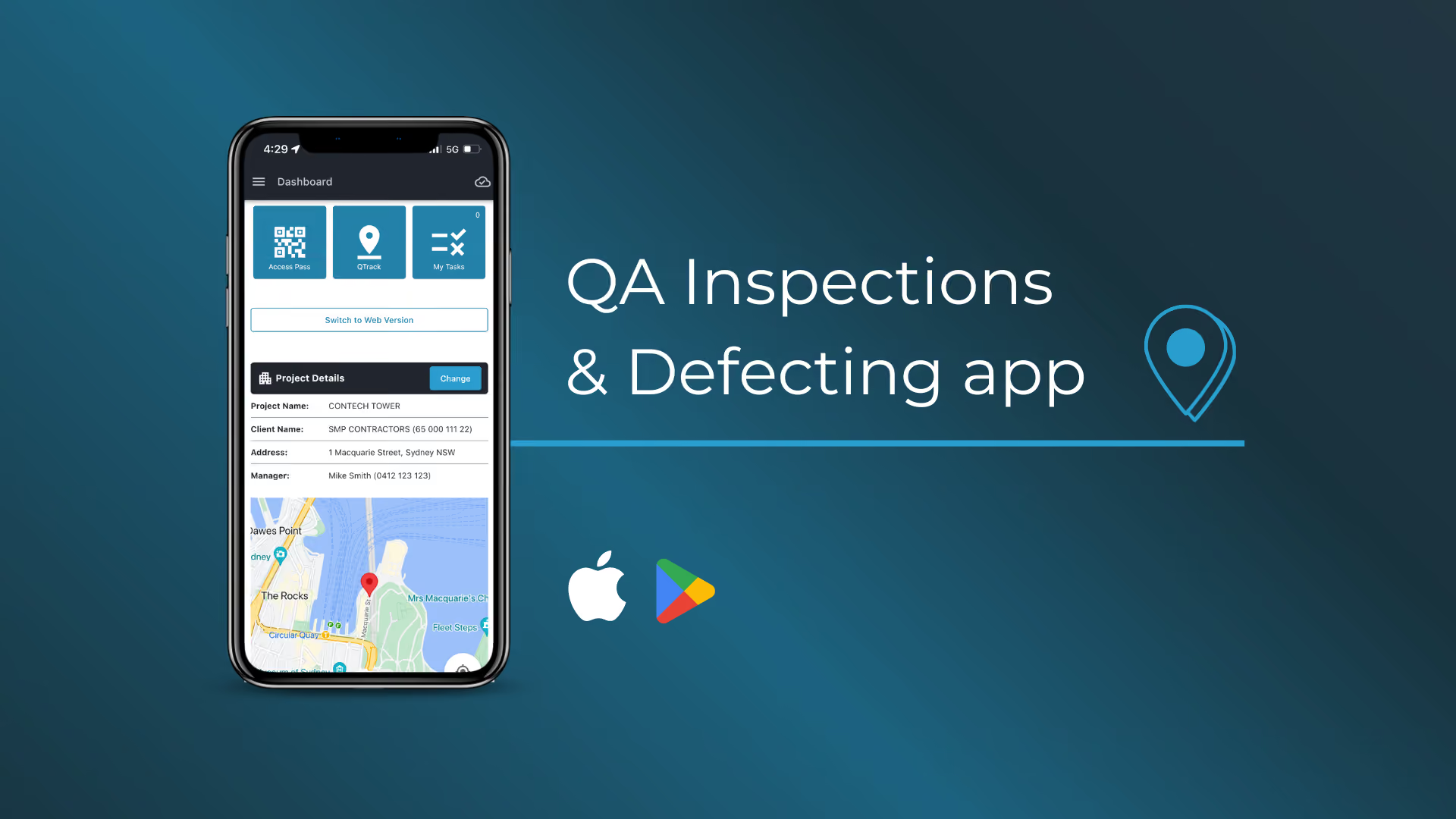
Fast, reliable access is provided on any device. Latest approved documents are easy to locate, and superseded versions are clearly distinguished to reduce the risk of outdated information being used on site.
Documents are linked directly to related project processes, including permits, inspections, and variations. These connections are maintained within the platform rather than through manual references or external tools.
Not all document systems are built equal
Construction document management software should ensure every upload is structured and secure, building a thread that connects people, documents, and outcomes. That’s exactly what SIMPEL's Document Management 2.0 does.
Support every stage of delivery with documentation that’s always current, traceable, and easy to act on.
Ready to build with confidence, not crossed fingers? Book a demo now.
Frequently Asked Questions
What is construction document management software?
Construction document management software controls how construction documents are uploaded, reviewed, revised, approved, and accessed throughout a project. It manages the collection, review, and distribution of drawings and documents throughout the project life. Rather than acting as a repository, it proactively assists in the efficient management of documentation management.
How does construction document management differ between legacy and modern platforms?
Legacy document management systems focus primarily on storing and distributing files. Documents are uploaded and shared, but the surrounding review and approval activity often happens elsewhere.Modern construction document management software manages the work around documents, including preparation, review, revision, approval, and release for use, with that information captured and maintained in one system.
What should organisations expect from construction document management software today?
Construction document management software should include structured uploads, controlled review and approval pathways, retained audit history, clear version control, and reliable access to current documents on site.These features support consistent handling of documents as they change, are reviewed by multiple parties, and are relied on later in the project lifecycle.
When should construction document management processes be established?
Construction document management processes should be established early in a project, before document volumes and dependencies increase. Setting structure and controls at the outset avoids retrofitting processes once delivery is already underway.
Why is construction document management software difficult to use on site?
Construction document management software is often difficult to use on site when platforms are designed primarily for document distribution rather than active use. When documents are treated as static files, determining status, currency, or history requires additional effort.This becomes more pronounced under time pressure, when teams need to confirm whether information is current.

Sign up to Simpel's Newsletter
A quick read with our latest news, blogs, recent software releases, and big company updates