Safe Work Month 2025: Strengthening Safety on Every Job, Every Day
This year’s National Safe Work Month theme, ‘Safety: Every Job, Every Day,’ encourages all workplaces, regardless of occupation, industry, or size, to prioritise safety in every task. This couldn’t be more important in construction, where in 2023 alone, 45 workers lost their lives from site-related injuries.
Digitising core WHS processes helps turn safety into a consistent daily routine, so teams can manage risk and meet their obligations without added effort. With the right system, insights appear in real time to guide priorities and track progress, while built-in workflows assign owners, set due dates, and follow-up until tasks are complete. These features allow leaders to protect their workers and workers to protect themselves onsite.
What safety looks like in practice: From leadership to subbies
Safety depends on everyone knowing their part and following through. From leadership setting expectations to site teams applying them on the ground, each role contributes to consistent delivery through clear standards, accountability, and action.
Leadership: Executives, Directors, Owners
Leadership sets the standard by making safety a core business obligation, not a side activity. They define expectations, demonstrate commitment, and make decisions that prioritise safe, sustainable delivery even when schedules tighten.
- Standards & Targets: Establish organisation-wide objectives and track progress across all projects
- Governance & Evidence: Ensure there’s a complete audit trail that verifies all required work was completed to standard and fully documented
- Comprehensive Data: Use complete, current information to identify trends and make informed decisions
Management: Project Managers, Site Managers, Department Heads
Management turns safety policy into a workable plan and keeps it active through delivery. They align scope, schedule, and resourcing so controls are in place before work begins, monitor their effectiveness as conditions change, and act early when performance slips.
- Field Alignment: Convert policy into a workable schedule with clear checkpoints
- Actionable Dashboards: Monitor what is due that day, what is blocked, and what’s critical, then act on it immediately
- Issue Ownership: Assign actions with owners and due dates then ensure the loop is closed
Project Teams: Engineers, Coordinators, Foremen, Office Staff
Project teams are responsible for staying alert throughout the shift and acting as soon as conditions change. They verify that daily plans match site realities, rectify issues quickly, and ensure resolutions keep work on track and risk controlled.
- Daily Briefing: Surface potential new risks, hold points, and priorities in a concise view, then circulate updates
- Onsite Records: Capture notes, photos, and approvals as the work happens and record a complete diary at day’s end
- Rapid Escalation: Route issues to the right owners and ensure urgent tasks are actioned immediately
Subcontractors: Tradespeople, Contractors, External Suppliers
Subcontractors are responsible for completing work safely and in line with site requirements. They confirm they are authorised and ready to work, check conditions at the point of work, and report hazards or near misses to keep risks controlled before harm occurs.
- Work Readiness: Complete onboarding tasks including inductions, SWMS, and permits and submit required uploads prior to site entry
- Stay Accountable: Check daily notifications for any changes in site conditions, acknowledge updates, and follow the instructions provided
- Report & Respond: Raise hazards or near misses immediately with a brief note or photo, then complete any follow-up actions assigned
How SIMPEL's HSE modules embed safety on every job, every day
Safety is managed one step at a time. SIMPEL connects those steps into a single daily flow, from readiness before arrival to close-out at day’s end. Updates stay clear, procedures stay consistent, evidence is captured, and follow-up happens without manual chasing.
Before stepping on site: Compliance verified
- Inductions & Compliance: Workers upload prerequisite document (if applicable) and complete inductions prior to entering site.
- Safety Documentation: Current policies, procedures, and plans are available in a central register with version history and access controls.
On arrival: Confirm today’s working conditions
- Daily Declarations / Pre-starts: Daily updates appear in each worker’s dashboard or via QR for review and acknowledgement; when Site Access is enabled, completion is required for entry and non-compliant responses alert management.
- SWMS & Safety Plans: Centralised submission, review, and digital sign-off keep teams on the latest approved method with version control and real-time compliance visibility; when integrated with Site Access, unsigned requirements can be flagged at entry.
- Visitor Management: Visitors are registered, reviewed, and approved. Records are captured for audit and reporting purposes.
Before work starts: Readiness and controls
- Permits: Effectively manage and communicate the review, sign-off, and completion of permits for high risk works.
- Plant Management: Plant and equipment are registered with unique identifiers and QR codes. Inspection schedules, certificates, and alerts keep items compliant and ready for use.
During work: Keep risk controlled
- HSE Observations: Hazards and near misses can be reported the second they’re found with locations, photos, and severity labels for faster triaging and action.
- HSE Forms & Inspections: Routine safety walks and point-of-work verifications maintain control as conditions change.
- Site Notifications: Send critical notifications simultaneously by email and SMS to everyone on site (when paired with Site Access), all inducted personnel, or custom groups, within seconds.
End of day: Close out and capture the record
- Site Diaries: Record a complete summary with notes, photos, weather, and head counts. Entries are searchable and audit-ready.
Continuous improvement: Turning instant insights into action
- Incident Management: Capture incidents with structured classifications and guided workflows, protect sensitive details with permissions, link events to workers and plant, issue and track corrective actions, and keep investigations moving with embedded forms and automated notifications.
- Project Dashboards: Surface what is upcoming, due today, what is blocked, and what is critical, with configurable widgets, drill-through, and actions from the same screen.
- Organisation Intelligence: Show portfolio health in a live, weighted matrix with traffic-light thresholds and one-click drill-down to project dashboards.
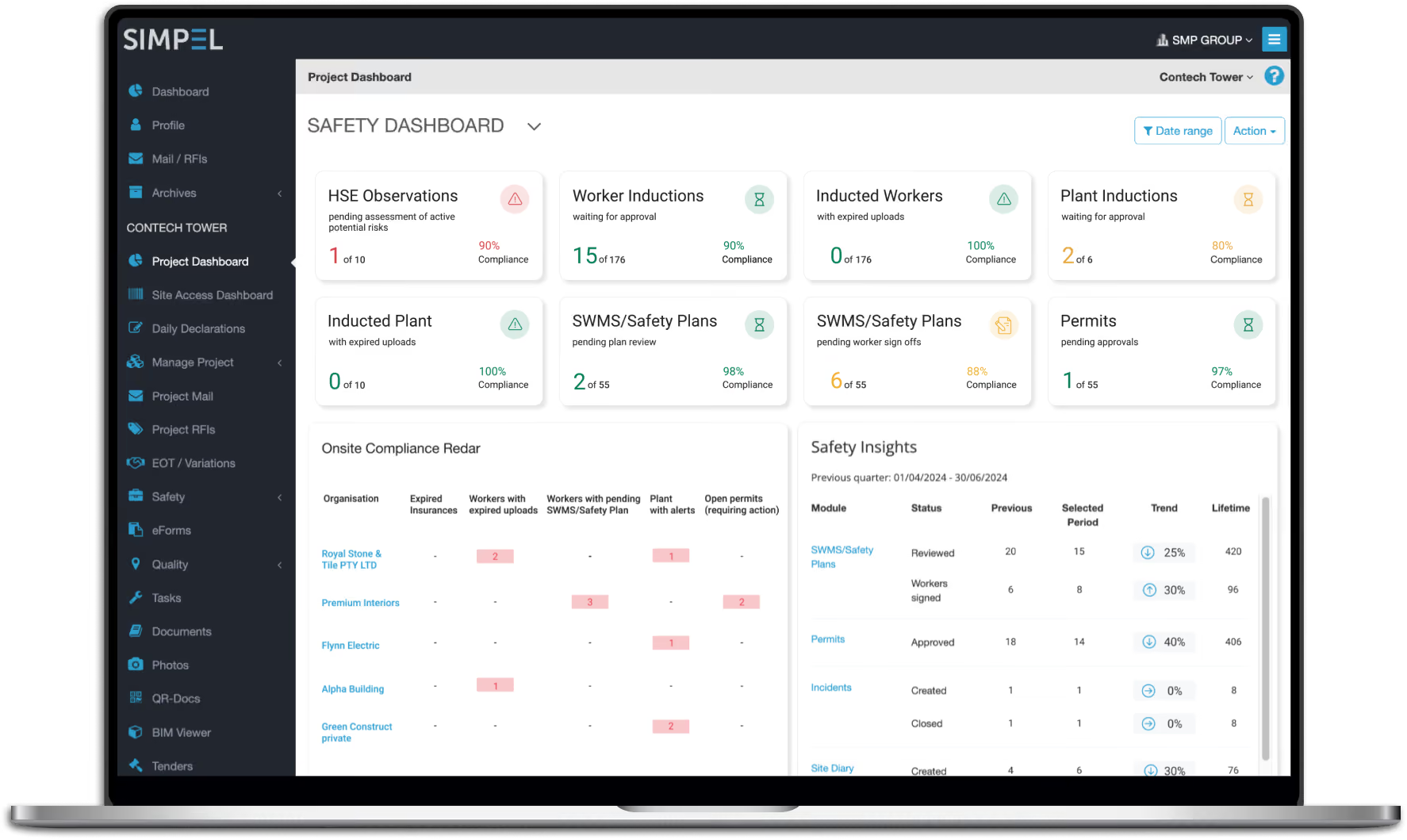
The traffic light project dashboards are one of the strongest features. Our directors and managers are really into their data and analytics, so having that built in was a massive bonus. You can spot issues straight away, like if something’s expired, a licence isn’t valid, or someone hasn’t been inducted. The prompts make it easy to stay on top of it.
Lloyd Lucas, Quality & Systems Manager
Keeping the momentum after Safe Work Month
Safe Work Month is the moment to start conversations about how to embed safety on every job, every day but the next step is to move it from a message to a method. It’s a chance to pause, review what’s working, and strengthen the systems that keep people safe long after October ends. Whether that means improving visibility, tightening compliance, or simplifying daily routines, the opportunity is the same: to make habits that lasts.
Need help on the software front? Book a demo to see SIMPEL's workflow for yourself.

Sign up to Simpel's Newsletter
A quick read with our latest news, blogs, recent software releases, and big company updates