Why Legacy Construction Software Falls Short And How To Move Beyond It
Construction projects are inherently complex and changing operational systems introduces genuine risk, particularly once delivery is underway. So, when existing software continues to keep projects moving, even if it isn’t optimal, many organisations decide the risk of changing it outweighs the cost of keeping it.
That decision made sense when documentation requirements were lighter, regulations weren’t as complex, and the systems already in place could still meet the expectations placed on them.
But the construction industry has changed significantly since then.
Projects are more intricate than ever, both in build and compliance obligations, and clients expect far more visibility into how work is being delivered. Organisations still relying on legacy construction software aren’t simply carrying inefficient technology. Increasingly, they’re operating in ways that no longer reflect the expectations of the industry.
Where Legacy Construction Systems Fall Short
Legacy systems rarely fail outright; they fall short in ways that surface across day-to-day delivery.
A variation can't be substantiated because the record was incomplete. An incident investigation is delayed because induction records are sitting in a filing cabinet. An audit becomes a manual exercise because project information is spread across spreadsheets, email chains, and disconnected systems.
When software doesn't support the way projects are delivered, people stop engaging with it. Information is recorded elsewhere, processes are bypassed, and compliance becomes increasingly dependent on manual follow-up. Workers carry the system through the extra time and workarounds; the organisation carries the risk that builds up behind them.
These are the natural consequences of asking systems built for a different operating environment to support today's delivery requirements.
Consolidated Data Creates Future Capability
Legacy systems don't just affect today's operations; they influence what organisations can do next. A project record developed with modern construction software provides more than operational visibility. It creates the foundation required for stronger reporting, more informed decision-making, and the successful adoption of emerging technologies, including AI. Whether an organisation can keep up depends on whether its project data is complete and connected.
Why Replacing Legacy Construction Software is Harder Than it Looks
Replacing a legacy system looks like a procurement decision: assess the options, choose a better platform, schedule the rollout. In reality, the selection is just one piece of the puzzle.
The difficulty sits in everything around it. Change often has to be introduced while projects are already underway. Processes and behaviours that have built up over years have to be reworked. And any new system has to earn its place on site, where the project record is actually created.
None of that is settled by a new contract. It's settled by how the transition is approached.
How to Manage a Controlled Transition to New Construction Software
The organisations that get this right treat the move as an operational transformation, not an IT project. A good transition comes down to four things: selecting fit-for-purpose software, making the change manageable during live delivery, working with software providers as partners rather than vendors, and being open to improving the processes built around the old systems.
Selecting Software for the Boots on the Ground
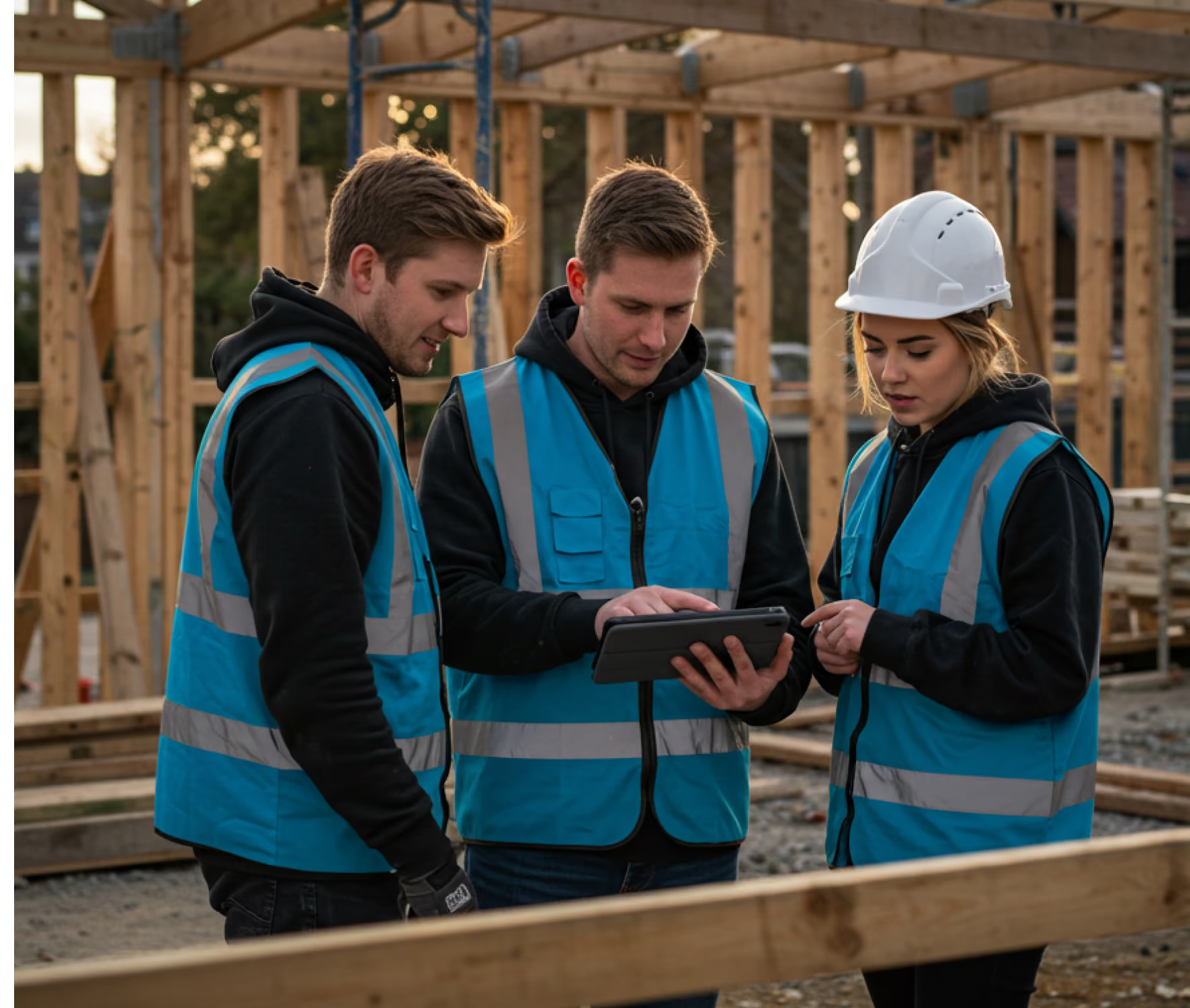
Every project record starts on site. Inductions, permits, inspections, observations, and the movement of people, plant, and materials are recorded most reliably in the moment the activity takes place. When recording this information feels separate from the work itself, people find a faster way to keep the project moving, whether that means reverting to paper, sending an email, or updating a spreadsheet after the fact. This isn't resistance to technology; it's a response to software that competes with the work instead of supporting it, usually leading to manual reconstruction or memory after the fact.
The software worth selecting is the one built for the boots on the ground, with enough breadth and depth to support the work taking place. When a platform reflects the realities of construction delivery, it earns its place by disappearing into the work, becoming second nature instead of another box to tick.
Transitioning Purposefully, Even When Mid-Project
There’s rarely a perfect time to switch construction software. Every project has competing priorities, established processes, and obligations that don’t pause while a new platform is introduced. Waiting for a quieter period can feel sensible, but for many organisations, that moment will never arrive.
A controlled rollout can begin with a single project, a small number of modules, or the area of operations carrying the greatest risk. The scope should be contained enough to protect the wider business, but meaningful enough to establish the implementation approach before the platform is extended more broadly.
The goal isn’t to find a disruption-free window. It’s to choose the right starting point, sequence the rollout carefully, and prove that the change can happen without interrupting construction.
Making Software Providers Partners Not Vendors
Whether a new platform becomes embedded in operations depends as much on the provider behind it as the software itself. Implementation support, local knowledge, and regular contact all influence how successfully it’s introduced and adopted across the business.
A provider that becomes a partner, is the one that remains involved beyond initial setup. They’ll tailor training from rollout through ongoing use, adapt implementation plans when conditions change, and continue working with the organisation to maximise value.
That involvement matters because construction organisations rarely operate in exactly the same way. This is often overlooked during procurement, where feature lists and price dominate the conversation. Those factors matter, but so does what happens after the contract is signed.
Don't Rebuild Old Workarounds in New Construction Software
Moving to modern construction software creates an opportunity to review how existing processes are supported and where they can be strengthened. Some practices remain essential because they underpin compliance, ISO certification, safety, quality, and audit requirements. Others exist because the old system couldn’t support a better way of operating. Those steps shouldn’t automatically be carried into the new platform simply because they’re familiar.
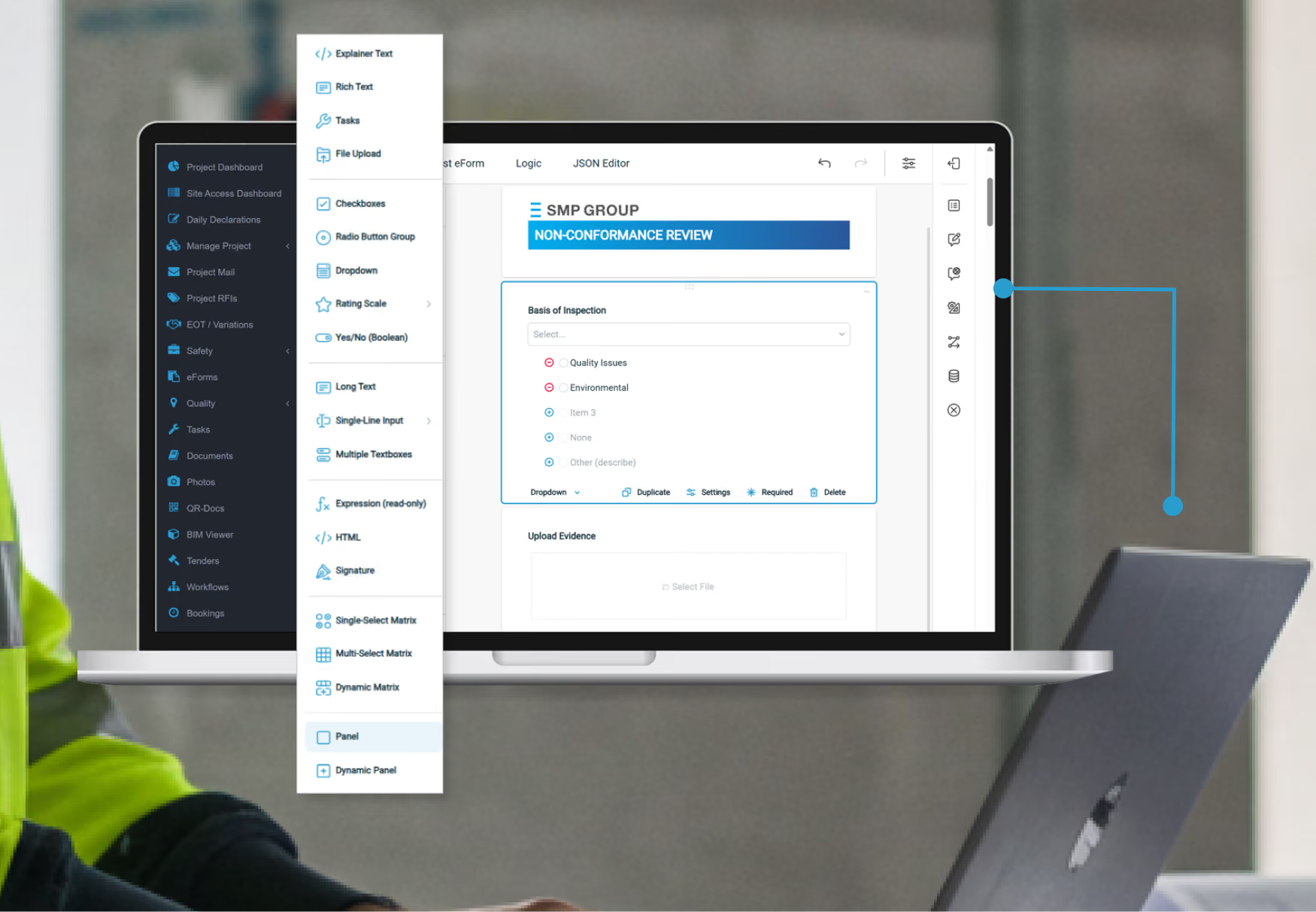
An effective transition includes reviewing existing forms and approval pathways before they’re mapped into the new system. Non-negotiable fields, evidence requirements, and sign-offs may still need to remain, but the way they’re managed can change. Conditional logic, multiple signatures, and different review routes can reduce unnecessary steps, direct each submission to the right people, and ensure required information is captured. This preserves mandatory controls without carrying the old limitations forward, so forms, uploads, and sign-offs follow how work actually happens on site.
Moving Beyond Legacy Construction Systems
Every system on a construction project asks something of the people using it. But modern construction software should give more back than it takes, turning everyday site activity into reliable project information without adding another layer of administration.
The difference comes down to where the burden sits. A modern construction platform moves the process forward; a legacy system leaves people to fill the gaps.
Moving beyond legacy systems isn’t about chasing the newest technology. It’s about choosing software that reflects how projects are run today, reduces the burden on the people using it, and creates a stronger foundation for what comes next.
See how SIMPEL replaces legacy systems with a unified platform built for how work happens. Book a demo today.
Frequently Asked Questions
What is legacy construction software?
Legacy construction software refers to older systems that no longer support the complexity, compliance obligations, visibility, and data requirements of modern construction projects. These systems may still function but often require manual workarounds and disconnected processes to meet today’s expectations.
What are the signs that construction software is outdated?
Common signs that construction software is outdated include incomplete project records, duplicate data entry, information stored across multiple systems, heavy reliance on manual follow-up, and low engagement from site personnel. These issues often indicate that the software no longer reflects how work happens on site.
Can construction software be replaced during a live project?
Construction software can be replaced during a live project through a controlled rollout. Organisations often begin with one project, selected modules, or an area carrying greater operational risk before extending the platform more broadly.
How can organisations transition away from legacy construction systems?
A successful transition requires fit-for-purpose software, a reasonable rollout timeline and scope, ongoing provider support, and a review of the processes built around the existing system.
Why does connected construction data matter?
Complete and connected project data supports stronger reporting, more informed decision-making, and greater operational visibility. It also creates the foundation required for organisations to adopt emerging technologies, including AI.

Sign up to Simpel's Newsletter
A quick read with our latest news, blogs, recent software releases, and big company updates