Understanding Air-Gapped Construction Software For Offline Defence & High-Security Projects
Most technology has moved to the cloud, and for good reason. It's accessible, scalable, and requires less internal maintenance than the server rooms of years past. Cloud infrastructure can also offer exceptionally high levels of security. Independent assessments such as IRAP provide evidence of how well these protections can perform, but some projects have restrictions that even the most stringent cybersecurity controls can't accommodate.
Defence facilities, critical infrastructure and classified government programs play by different rules. They often require complete separation from external networks. As AI-powered cyber-attacks become more targeted and more relentless, that separation has never been more critical.
For these projects, physical isolation doesn't have to mean a return to filing cabinet, disconnected spreadsheets and systems that can’t communicate. Air-gapped deployments allow construction software to operate under these restrictions while maintaining the core features required to get the job done.
What is an air-gapped environment?
An air-gapped environment is a physically isolated system that keeps software and sensitive information contained, with no direct access to the public internet or other local area networks. The software is installed directly to localised hardware, allowing deployment to also take place without internet access.
What high-security projects gain from going air-gapped
Disconnecting from the internet might seem like a step backwards for an industry that's spent the last decade moving into the cloud. For classified builds however, it brings advantages that are difficult to achieve in any other way.
- Fewer routes for attack: Ransomware and AI-powered cyber-attacks both rely on an online path into a system. Removing that path shuts out the most common forms of remote breach
- Records stay inhouse: All data remains on the project’s dedicated infrastructure, making it possible to actually point to the exact location where classified material is stored.
- Speed on remote sites: Defence and infrastructure projects can be built well away from reliable mobile coverage. Running on local servers and infrastructure means quicker load times and steadier performance day to day.
- No data shared with the vendor: Every record the platform creates stays within the secure environment. The software provider receives no usage data, logs, or project files unless given in-person access to do so.
Why Not All Construction Software Can Be Air-Gapped
The ability to air-gap construction software depends heavily on how it’s built. Construction platforms often integrate with third-party applications to support different activities. For example, document management and RFI's might sit within the core platform, while site safety is managed by another provider. In the cloud, these applications can be stitched together to exchange information.
For that same setup to work on an air-gapped project, both applications need to run and exchange information on the project’s own servers. Both vendors need to make that possible, either by designing their software for local operation from the start or by adapting features that rely on external services. Third-party applications that depend on cloud infrastructure may need modifications or replacements, and some functionality may still be lost.
Planning for the Life of an Air-Gapped Platform
On a multi-year project, planning for an air-gapped deployment includes deciding how the platform will be maintained after installation. Assigning responsibility and agreeing on procedures before deployment makes this work part of routine project administration.
The plan should cover:
- Software updates: Decide who will install new releases and when updates can be scheduled.
- Data transfers: Confirm which files, if any, can be transferred and who can authorise each transfer.
- System maintenance: Decide which support and servicing tasks authorised project personnel will handle and when a technician will need approval to attend the site.
- Backups and recovery: Set how often records will be backed up, whether they’re in the server or physical drives, and where copies will be stored.
- Hardware management: Confirm how equipment will be brought on site, replaced, or removed, and which inspection, quarantine, or sanitisation steps apply.
SIMPEL: Unified Construction Management for High-Security Projects
SIMPEL’s unified software is purposefully designed to be functional and usable in an air-gapped environment, allowing authorised workers on approved devices all the benefit of the platform without the need for cloud connection.
Its approach to high-security construction delivery includes:
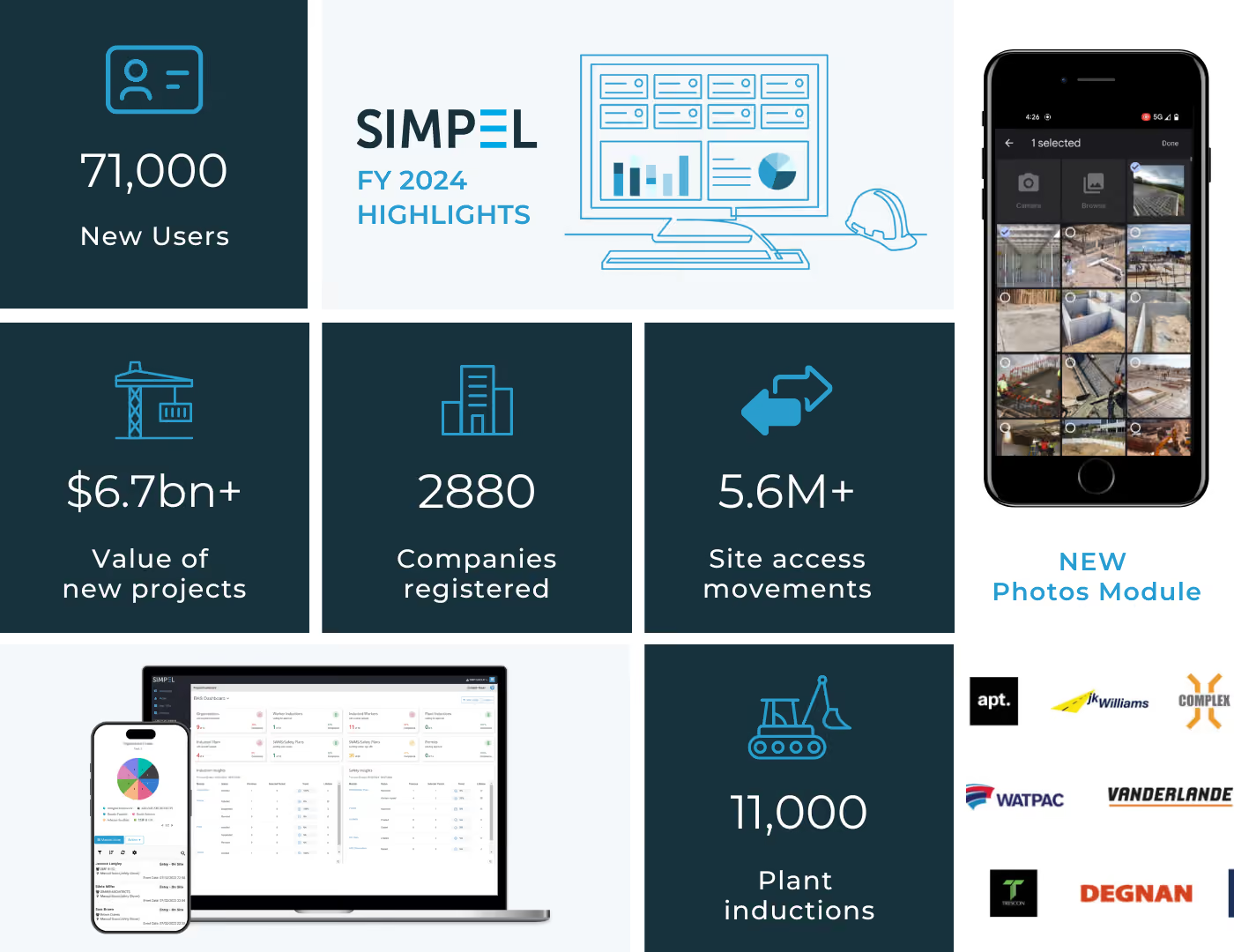
- One vendor, every module: SIMPEL has over 42 modules across Project Essentials, Safety, Quality, Site Access, Logistics, and Reporting, providing the full breadth and depth of operational functionality needed without third-party integrations.
- Multiple layers of isolation: Separate air-gapped environments can operate within an already isolated project, supporting areas with different security classifications, including highly restricted facilities within a larger defence development.
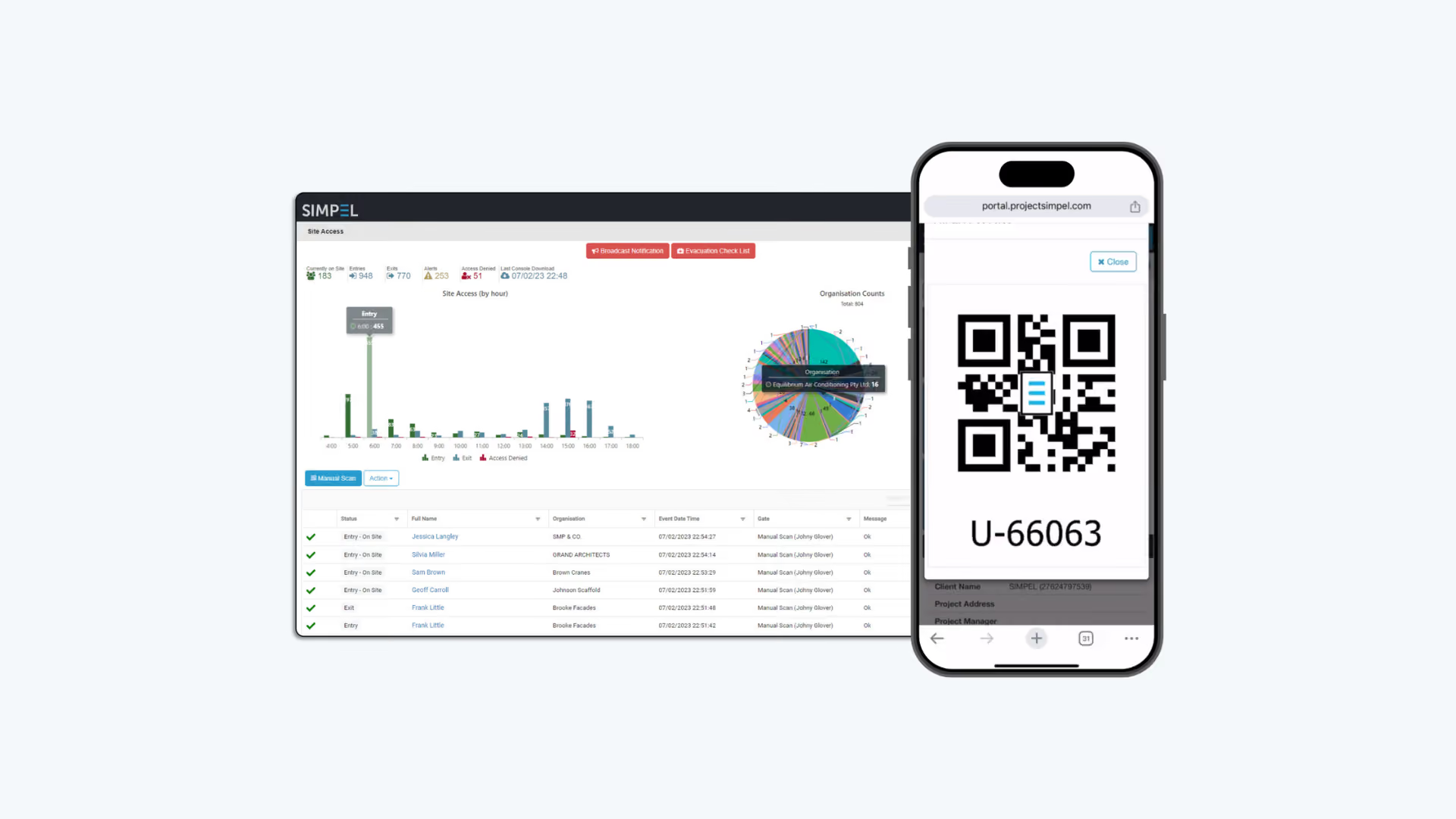
- Proprietary hardware: SIMPEL develops its site access hardware and software as one system, which keeps them communicating inside the air-gap environment. Each scan checks a worker's identity and security clearance before entry is granted.
- Zone management: Further access permissions can be set for highly restricted areas, with an auditable record that includes who was authorised to enter, when they entered and exited, and who made changes to the settings.
- Security-cleared personnel: Staff with Australian Government security clearances can support implementation within restricted facilities, subject to project-specific access requirements.
- IRAP Assessment: SIMPEL has undergone an Australian Government IRAP Assessment to 'PROTECTED' level.
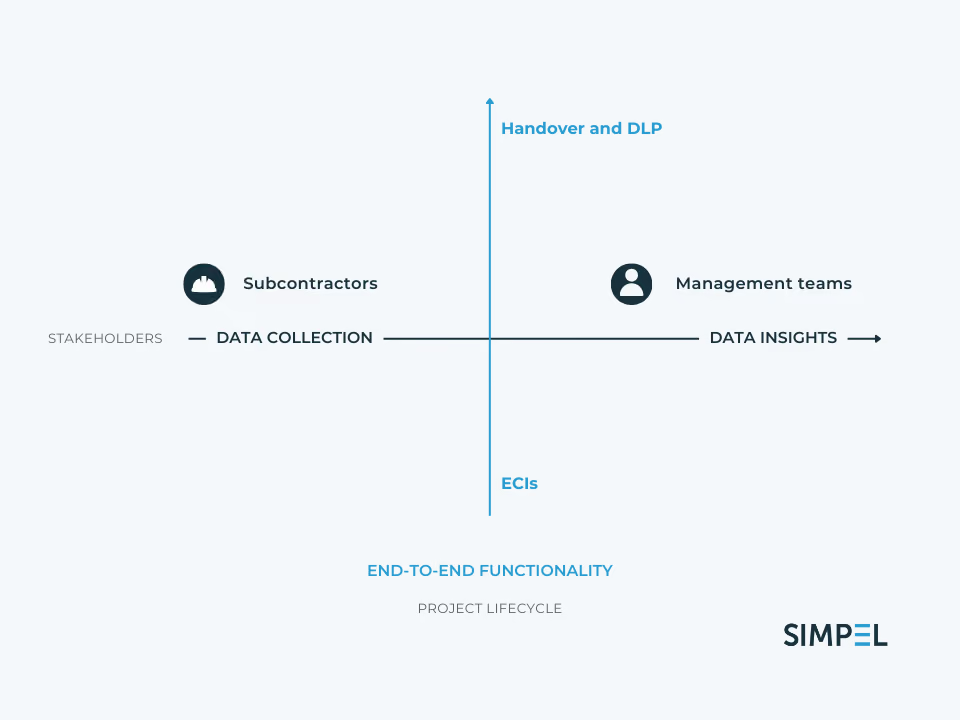
- Unified data set: Operational data from each module feeds into a single project data set, providing real-time insights to act on immediately and supporting deeper analysis of project performance.
Built for construction, prepared for isolation
Being air-gapped might change where the software sits and how certain tasks are handled, but it shouldn’t reduce what can be achieved on site. With software built for purpose and the right planning in place, even the most sensitive projects can benefit from the same level of digital management expected on cloud builds.
In high-security construction, choosing the right software isn't just an IT decision. It's a security decision.
Frequently Asked Questions
Why is air-gapped software used in defence construction projects?
Defence construction projects may involve classified information, restricted facilities, and strict controls over external communications. Air-gapped deployments allow construction activities to be managed digitally while complying with project-specific requirements for network isolation and information handling.
What is the difference between air-gapped and offline software?
Offline software can temporarily function without internet access, often with limited functionality, and synchronises information once connectivity returns. Air-gapped software operates within an environment deliberately isolated from external systems, with any data transfers subject to approved security procedures.
What is air-gapped construction software?
Air-gapped construction software is a construction management platform hosted within an isolated IT environment that has no direct connection to the public internet or other local area networks. It allows authorised personnel to manage construction activities digitally while sensitive project information remains contained within the approved systems and devices.
Does an air-gapped environment guarantee cybersecurity?
No. Physical isolation reduces exposure to threats originating from external networks, but risks remain through removable media, unauthorised physical access, and internal activity which is controlled by the client. Access controls, security monitoring, approved maintenance procedures, and controlled data transfers remain essential.
Can construction management software operate without internet access?
Yes, provided the platform is designed to function independently of external services. Construction management software hosted within an isolated environment can support document management, safety inspections, quality management, approvals, and reporting through an internal network.
Can all construction software be deployed in an air-gapped environment?
Not unless it is designed and deployed to do so. Platforms that depend on external cloud services or third-party applications may require substantial modifications to operate independently. Software with native functionality and a unified data architecture is generally better suited to isolated deployments.
Sign up to Simpel's Newsletter
A quick read with our latest news, blogs, recent software releases, and big company updates