Incident Management in Construction: Reading the Warning Signs & Preserving the Record
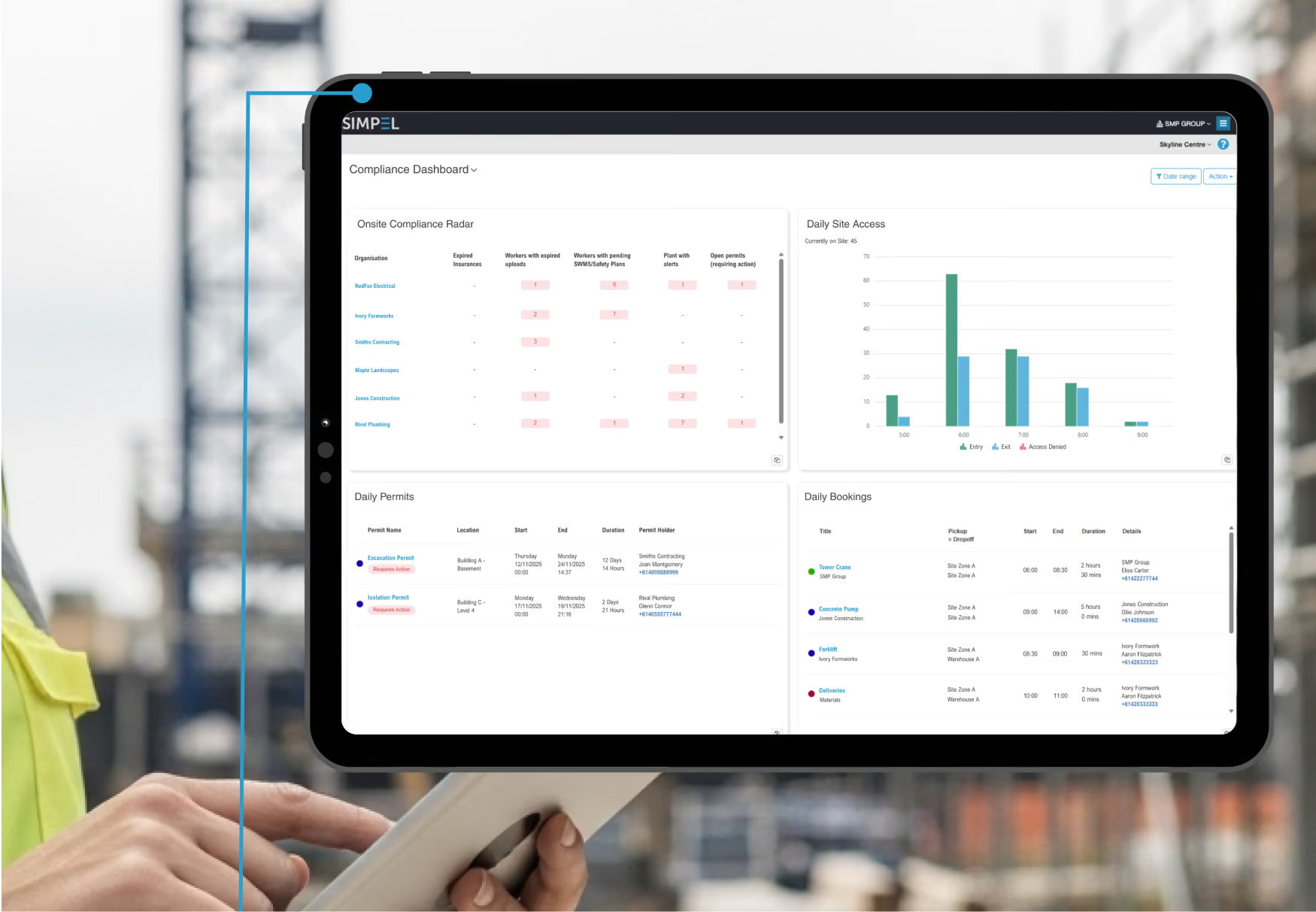
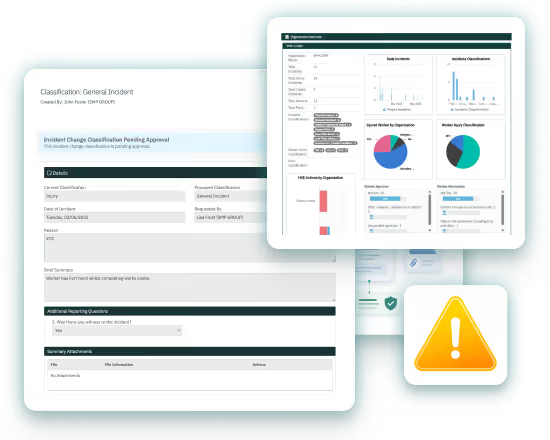
Daily incident numbers spike within a selected period. Hand injuries account for a significant share of affected body parts. Open HSE actions are concentrated against one organisation.
Separate records. Separate days. Together, a pattern arises.
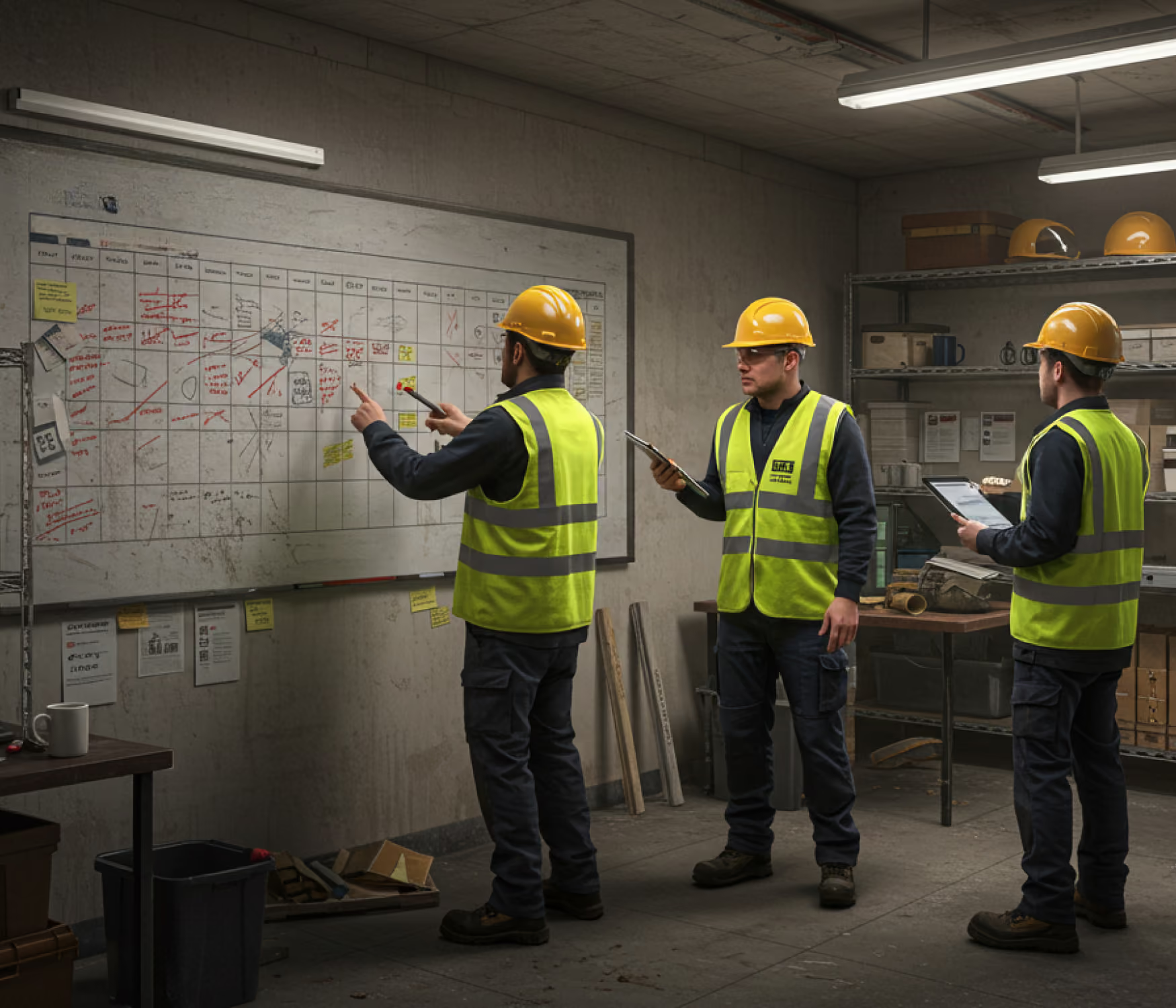
Accidents happen but they’re often preceded by near misses, minor faults, and repeated behaviours. One challenge with incident management in construction is that isolated records can allow repetition to continue, even after corrective actions are issued. When the connections are difficult to trace, so are the warning signs.
It’s also important to consider that, although managing that exposure is first and foremost about protecting those on site, the compliance implications carry significant weight too.
Structured, digital incident management kills two birds with one stone. Connected records feed live dashboards that bring together incident rates, classifications, and injury types across projects and organisations. Then with evidence of action attached to each incident record, the entire response can be substantiated.
That’s when the data earns its value twice: influencing prevention and standing up to scrutiny.
Report to Resolution: 5 Features Needed to Build Useful Incident Management Datasets
Building a useful incident management dataset requires more than collecting individual reports. Five core features support the process from initial submission through to resolution: consistent classification, ease of capture, coordinated action, connected evidence, and organisation-level reporting. Together, they determine whether records remain isolated accounts or become structured information that can expose patterns over time.
Enforce consistency: Log every detail with intent
Powerful incident datasets start with consistent reporting. Pre-set classifications, severity levels, and injury codes reduce individual interpretation and ensure incidents are recorded the same way, with the same weight, across every project. This provides reliable and accurate data to compare, filter, and analyse over time.
Support participation: Capture information at the source
Structured fields only add value when reporting is adopted across the entire organisation. Mobile access, guided forms, and straightforward submission processes make it easier for site personnel to record events while details are still current. Broader participation improves the coverage and timeliness of the resulting data, providing a more representative view of organisational exposure.
Trigger action: Get the right people involved immediately
Effective incident management in construction needs to retain the response as well as the event. Assigned responsibilities, due dates, status updates, corrective actions, and completion records show how each incident was managed through to resolution and allows action to be taken quickly. Over time, this creates a measurable record of response times, overdue actions, common corrective measures, and the effectiveness of the organisation’s response.
Build the evidence trail: Connect compliance records
An incident report captures what happened, but the surrounding records can help explain why. Inductions, signed safety plans, plant inspections, and uploads all add vital context. Connecting that history within the same platform makes it immediately accessible during time-sensitive investigations and audits, while supporting a more informed assessment of contributing factors and further prevention measures.
Consolidate the data: Build an organisation-wide view
When each report feeds directly into live dashboards, frequency rates, classifications, injury mechanisms, affected body parts, and HSE action statuses become comparable across projects, contractors, and time periods. An organisation-level view removes the need for manual consolidation and shows where exposure is concentrated or changing over time – automatically and at a glance.
Reading the Warning Signs Across Incident Data
Some warning signs are easy to spot, such as corrective actions remaining open beyond their due dates. Others only become visible when incident data is viewed together.
A rise in frequency rates, repeated injury types, or a concentration of open actions may point to an area that needs closer attention. These figures help identify where something is changing, while the supporting records provide the context needed to understand why.
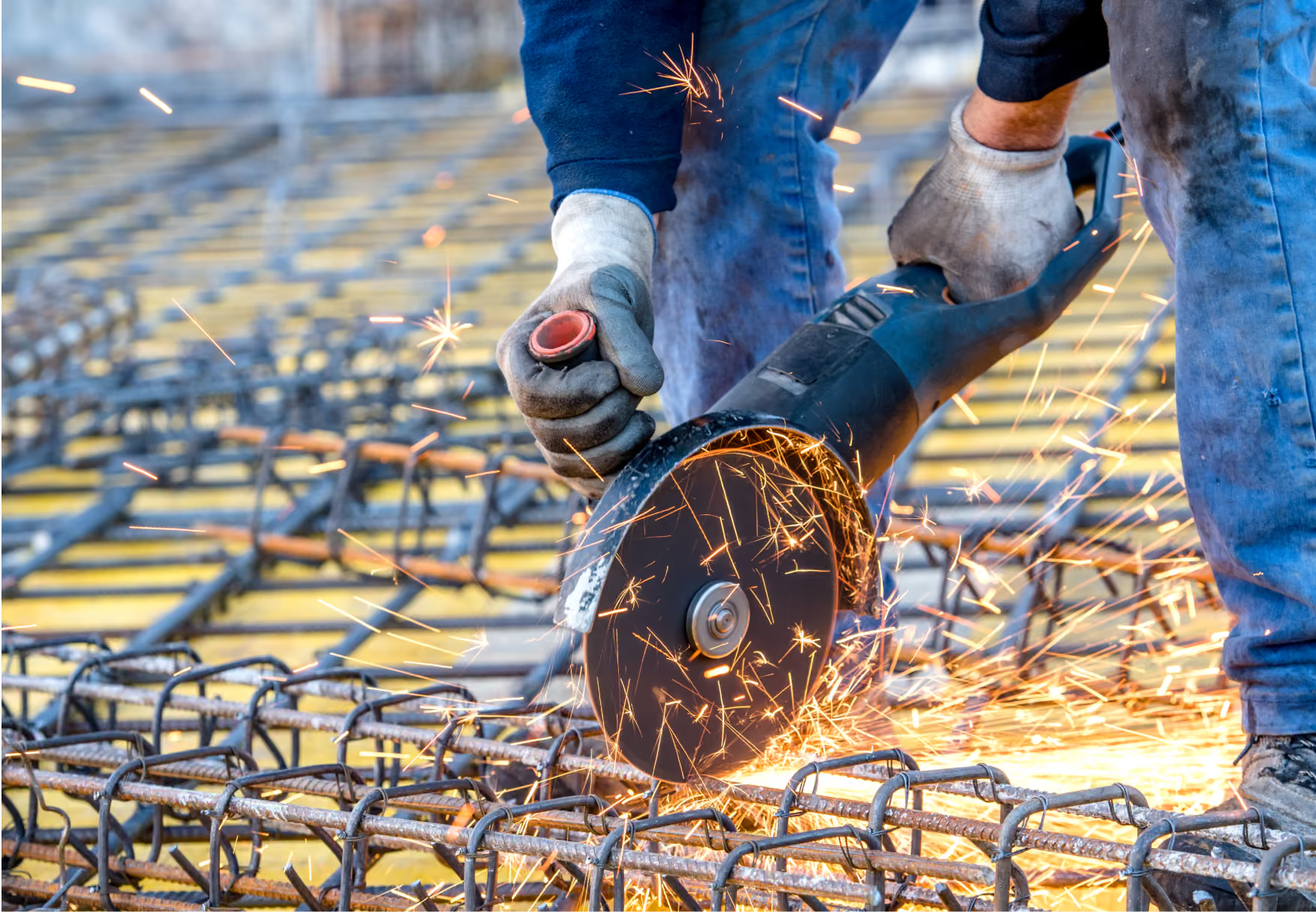
If hand injuries are increasing, for example, the organisation can look deeper to determine whether they involve the same task, equipment, work method, or contractor.
This is what separates data collection from risk intelligence. The value lies not only in identifying a change, but in understanding its context, testing its significance, and determining what intervention is required.
SIMPEL’s Supports Structured Incident Management
SIMPEL’s Incident Management module is designed to support structured reporting, connected investigations, and controlled resolution across projects and organisations. Each capability strengthens the incident record while making recurring conditions, unresolved actions, and emerging trends easier to identify.
Pre-set classifications for Consistent Reporting
Incident types, injury classifications, and severity levels are built into the reporting process. This gives reports a consistent structure across projects and reduces variation in how events are classified.
Granular user permissions for sensitive information
Predefined user roles restrict access to confidential health records and sensitive investigation details. Relevant stakeholders receive the information they need, while broader reporting remains available without exposing restricted information.
Connected worker and plant records
Incidents are directly linked to worker profiles, induction status, signed SWMS and safety plans, as well as plant inspection history and induction records for equipment related events. This gives investigators access to relevant history without the hassle of manually compiling it.
Embedded electronic forms within investigations
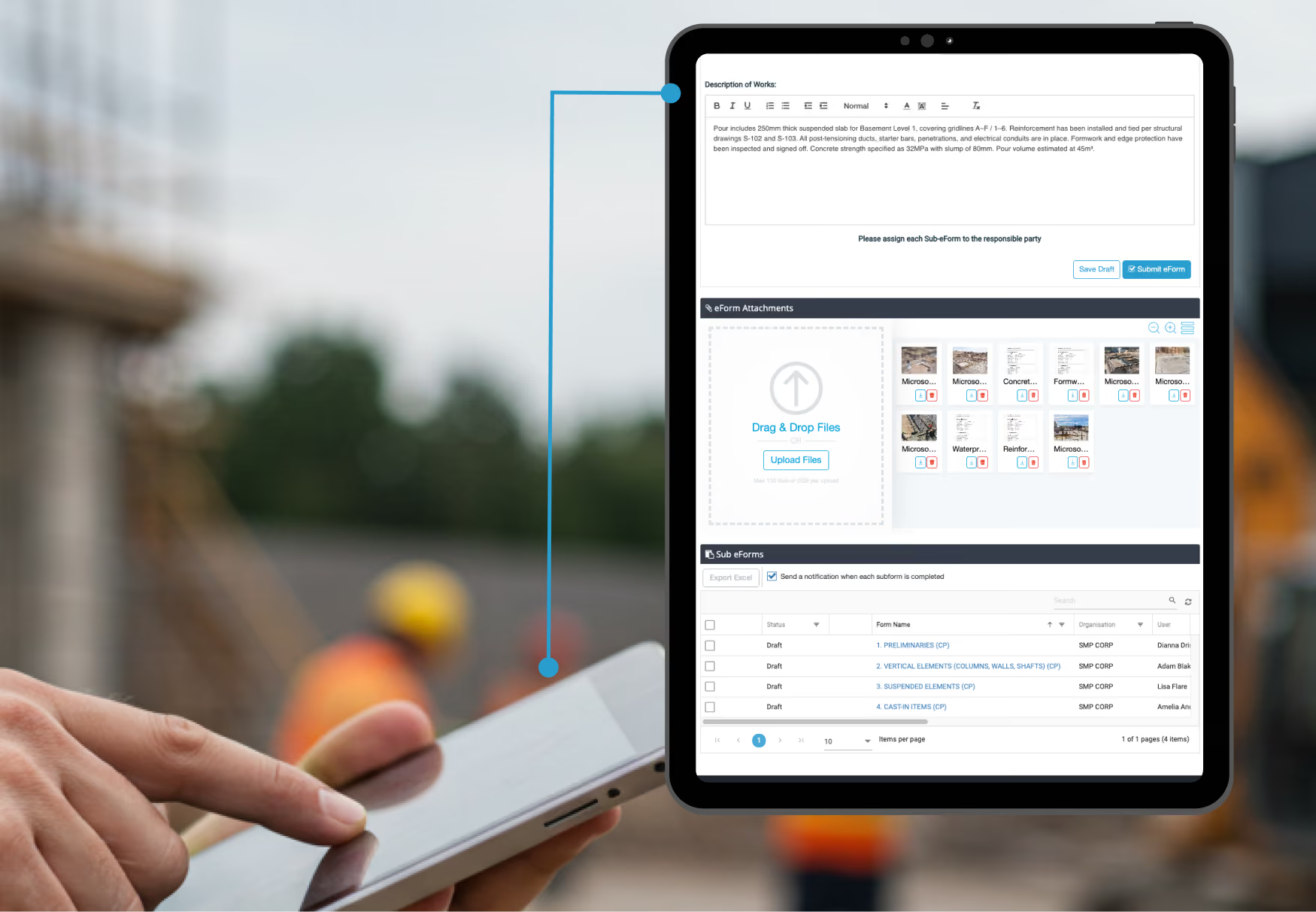
Electronic forms can be incorporated directly into investigation records, capturing witness statements, supervisor findings, corrective measures, and supporting documentation in one structured environment.
Automated notifications and tracked HSE actions
System-generated alerts notify relevant supervisors and safety leads as soon as an incident is logged, so action can be taken immediately. HSE actions are assigned with ownership, due dates, and tracked status, making responsibilities and outstanding actions easy to identify.
Live dashboard with organisation-level reporting
The dashboard brings frequency rates, worker and plant classifications, injury details, and HSE action status into a single organisation-level view. Results can be reviewed over a selected date range and exported for external use.
Turning Incident Data Into Organisational Insight
A flagged hazard is one part of the picture. Its significance becomes clearer when it can be considered alongside subsequent actions, outcomes, and related records.
Strong incident management in construction turns individual records into something more useful: a body of operational data that helps organisations recognise recurring issues, assess where exposure is building, and direct attention where it is needed most.
Prevention remains the priority, but the record left behind matters too. Investigations, actions, and outcomes provide evidence of how known issues were addressed when that response is later examined by an auditor, regulator, client, or insurer.
SIMPEL brings reporting, investigation, corrective action, and organisation-level analysis into one system, helping organisations get more value from the information already being collected.
Request a demo to see SIMPEL’s Incident Management module in action.
Frequently Asked Questions
What is incident management in construction?
Incident management in construction is the process of recording, investigating, responding to, and reviewing incidents, hazards, near misses, and related safety events. Effective incident management also preserves the actions, evidence, and outcomes associated with each event so organisations can identify recurring issues and support compliance requirements.
Why is incident management important on construction sites?
Incident management helps construction organisations respond to safety events, assign corrective actions, preserve investigation records, and identify patterns across projects. When reporting is structured and consistent, the resulting data can also support earlier intervention by highlighting recurring injuries, overdue actions, plant issues, or changing frequency rates.
What should construction incident management software include?
Construction incident management software should support consistent classifications, mobile reporting, assigned actions, due dates, investigation records, supporting evidence, user permissions, and organisation-level reporting. These features help turn individual reports into structured data that can be reviewed across projects, contractors, and time periods.
How can incident data help prevent future incidents?
Incident data can reveal recurring conditions that may be difficult to identify from individual reports alone. Comparing classifications, injury mechanisms, affected body parts, plant involvement, frequency rates, and corrective actions can help organisations identify areas that warrant further investigation and determine where intervention may be required.
How does digital incident management support construction compliance?
Digital incident management creates a traceable record of how incidents were reported, investigated, and addressed. By connecting investigation findings, corrective actions, worker records, plant information, safety documentation, and completion evidence, organisations are better positioned to respond to audits, client reviews, insurer enquiries, and regulatory scrutiny.

Sign up to Simpel's Newsletter
A quick read with our latest news, blogs, recent software releases, and big company updates