
CONTRACTOR CASE STUDY
Sheet Piling UK Built Stronger Records And Took Control Of Safety With SIMPEL

BEFORE SIMPEL: MOVING FROM 'HIT AND HOPE' TO PROOF IT LANDED
Before adopting SIMPEL, Sheet Piling UK Limited was using a different provider across parts of its field operations. The system supported some functions well, but concerns arose when the business couldn’t be sure information had genuinely landed. A signature confirmed a document had been opened. It couldn't confirm the message behind it had been acknowledged.
We send out all these toolbox talks and we still don't know if they're being read and understood properly. It's very easy to just throw stuff on there and not chase it up, so it's a bit of hit and hope, when what you want is to drive it home and make sure people understand what you're trying to achieve. Our last provider promised the world and delivered an atlas.

Field records also carried limitations, with long forms that could lose everything entered if the work was interrupted. The frustration was felt most on the tools.
Some of these forms are quite long. You'd be in the middle of one, somebody rings you, and it disappears. You've got to start again. The operatives were not happy.

So, Richard and Louise Steed, Health and Safety Administrator, started the hunt for a system built for the way work happens, one that would lift the quality of their records and give confidence in the compliance of their projects.
CHOOSING SIMPEL: SOFTWARE COMPARISON WITH STRICT REQUIREMENTS
Several options were weighed up, each tested against how it would serve safety on site and the wider business alongside it. Cost, fit, and depth quickly narrowed the field.
Other software providers did a lot, but were priced per licence, not on turnover. Then somebody mentioned SIMPEL. I scheduled a call, had a look, and thought, you know what, this makes sense, let's have another meeting.
They measured the choice on more than safety, weighing how a complete, well-structured record reflects on the business as a whole.
I don't just look at it from a health and safety perspective. I'm a director, so I look at it holistically: how does it improve the business? A half-filled form doesn't look right. When a form's fully filled in with the information required, condensed into a proper record, it looks better for the business.
ONBOARDING: CHIME HEAD OFF, SIMPEL HEAD ON
Getting SIMPEL set up meant learning a new way of working, building forms with conditional logic and adjusting to a system built differently. With Richard and Louise fitting that around demanding full-time roles, the shift took time, but responsive support meant answers were never far away, and once the new approach clicked it came together quickly.
To get used to building forms with conditional logic, you've got to take your Chime head off and put your SIMPEL head on. It took time at our end because Louise and I both have other jobs, but once we got into it, it was easy to work with. Every time I emailed, I got what I needed, and if something needed a call, our Client Success Manager jumped on and got it sorted.
STRENGTHENING SAFETY: SIGNED, SEALED, DEFENSIBLE
RAMS, INDUCTIONS, AND DAILY DECLARATIONS
Everything a worker needs to start safely now runs through one connected chain, each step confirming the last before work begins. A daily declaration tailored to the conditions on site keeps that confirmation current, matched each day to the real risks in front of the crew. Version control ties it all together, keeping every revision on record so it's always clear which plan governed the work at any point in time.
That, to me, is the right way to do it. They're inducted, they've had the RAMS, they've signed to say they've understood it, and they've done a daily declaration every day to say they're fit for work. As a business, that takes the risk down. It makes us less liable. If something goes wrong and they say, have you read the RAMS? Well, I clicked on it, and that was it. Whereas now, you've signed to say you've understood it. And SIMPEL gives you version control, so the operatives have only got the most up-to-date information.
TURNING OBSERVATIONS INTO MANAGED ACTIONS
Raising an observation now takes a couple of clicks and a photo. Once submitted, each one is reviewed, classified, and carried through to resolution, meaning every concern raised on site is accounted for and leaves behind a complete, traceable HSE record.
We just tell the operatives, raise an observation. It doesn’t matter what it is. Raise it, put the pictures in, and then we’ll tell you what it is and what the next steps need to be. The fact that you can then record your actions on the back of that gives you an audit trail of what you’ve done and why you’ve done it.
OPERATIONAL VALUE: RIGHT INFORMATION, RIGHT PEOPLE, SOONER
A HEAD START ON POTENTIAL DELAYS
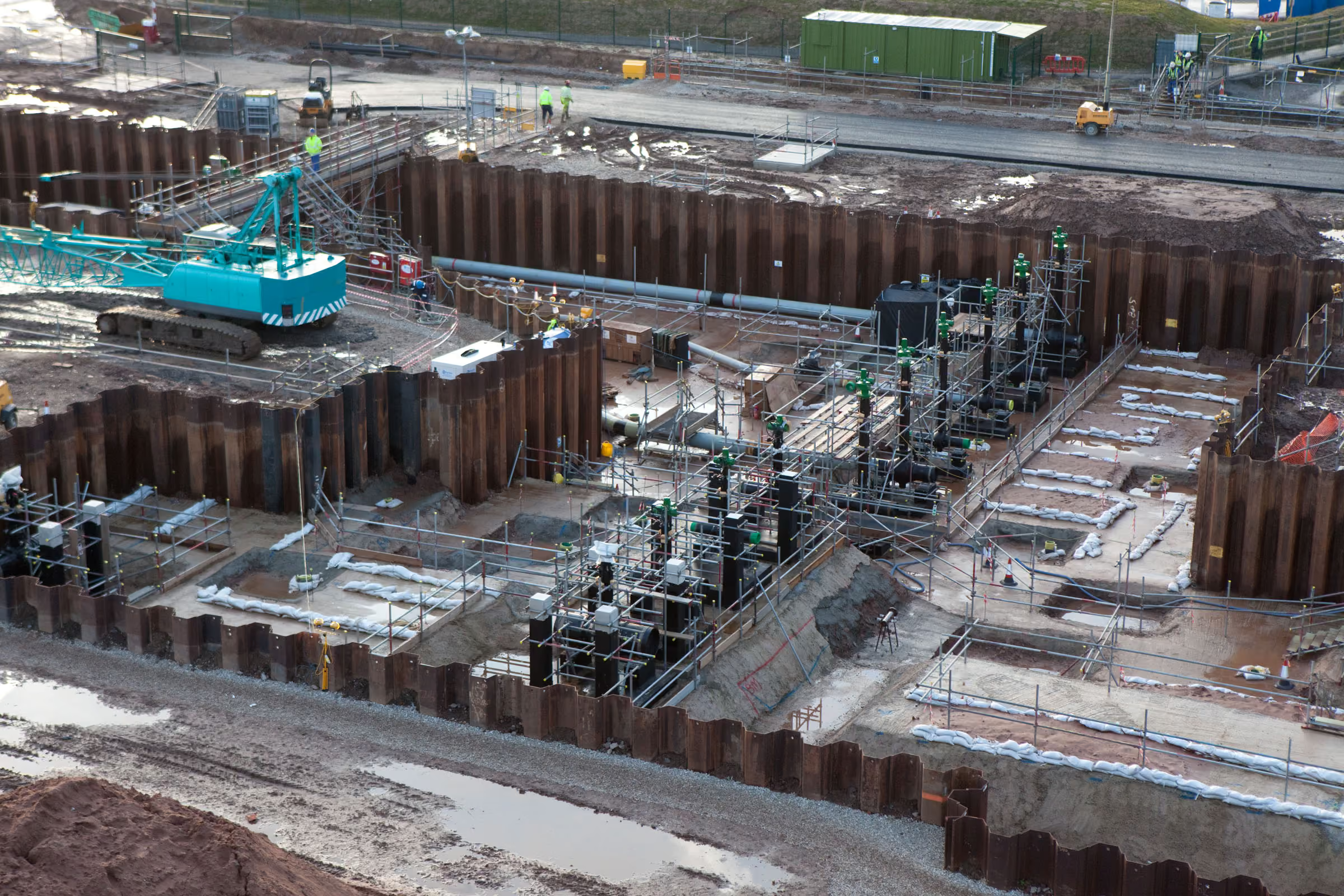
The daily records the crews complete now do more than log progress. When a delay is recorded, whether the wind has stopped the rig, a pile has met ground refusal, or the client has held work up, that entry reaches the office as the day unfolds, early enough to get ahead of it.
"There's been a wind delay, a refusal, a client delay, and it gives us a heads up. We can alert the commercial team earlier instead of waiting a week and then finding out. The records come in, they're assigned, and the contracts manager sees it straight away instead of at ten o'clock at night."
BRING ON THE AUDITOR
The real test of a safety record is what happens when someone comes to check it. With the full chain captured in one place, an audit becomes an open door rather than a scramble, everything issued, signed, and evidenced, ready to be looked through on the spot.
"The way it's set up, with the RAMS, inductions, and the rest of it, gives you tangible audit and HSE management in the field. If the Health and Safety Executive comes, I'd be quite confident to say, mate, there's SIMPEL, there's the login, go enjoy yourself, have a look through, see what's there."
HOURS RECLAIMED FROM REPORTING
Reporting used to mean doing the same work twice: pulling the information together once, then rebuilding it in a second version ready to circulate. That second pass has gone. With the record and the report now drawn from the same place, the effort that once went into duplicating everything is time returned to the day, and less of it spent behind a desk.
There are a lot of key features that will give me time back out of my day because it’s all on one platform. Before, I was mirroring two reports, extracting information and putting it into the version we use in-house to get the same result. Now it’s all together, so that gets me out of the office.
A PLATFORM SHEET PILING UK CAN GROW INTO
A platform only pays off when it's genuinely used, and this one has become part of how the work gets done, from the records on site to the confidence that they'll stand up when it counts. What began as a fix for safety and field records has room to reach further, growing with the business as new priorities come into view. For a director weighing the whole picture, that combination of use today and headroom tomorrow makes all the difference.
We probably used 50% of our previous provider. We'll probably use 85 to 90% of SIMPEL. I personally believe SIMPEL is value for money. The beauty of it is you can add the modules on, so down the road we might look at tenders, RFI documents, that sort of thing. The thought that you can build on it was one of the reasons why we chose it.
His advice to any contractor weighing the same move is straightforward.
Just be ready for a change. You've got to think a bit differently, get into the system, build the forms, and play with it before you're confident. Once you get to that point, it's essential.
ABOUT SHEET PILING UK
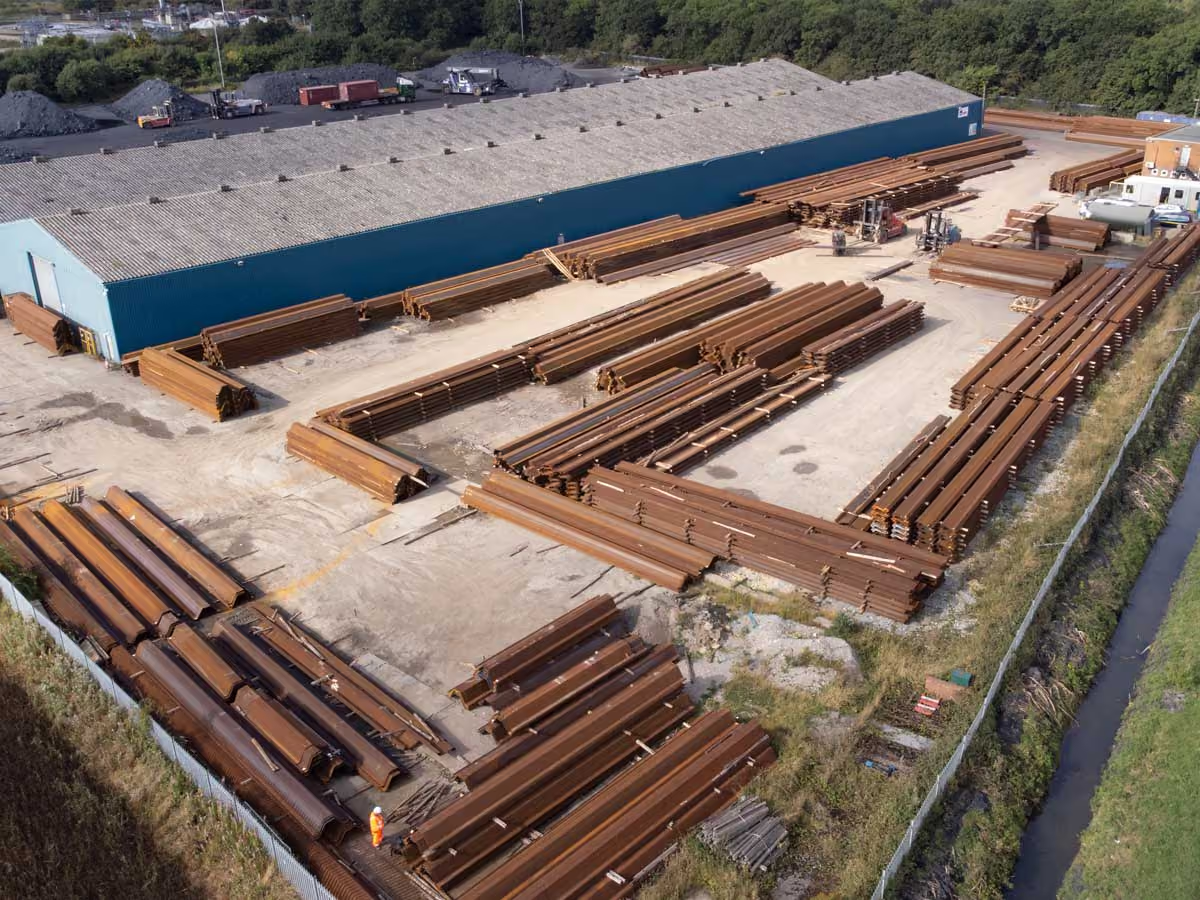
Sheet Piling UK is a specialist sheet piling contractor delivering temporary and permanent sheet piling works across the United Kingdom. With a focus on technically demanding projects, the company combines site expertise, plant capability, and disciplined HSE management to support safe, efficient delivery across a wide range of ground engineering environments.
Thanks to Richard Greenwood, Louise Steed, and the team at Sheet Piling UK for their ongoing support and contribution to this case study.
Knowing information was sent is one thing. Knowing it was understood is another.
See how SIMPEL helps organisations create audit trails that prove safety and compliance with evidence.
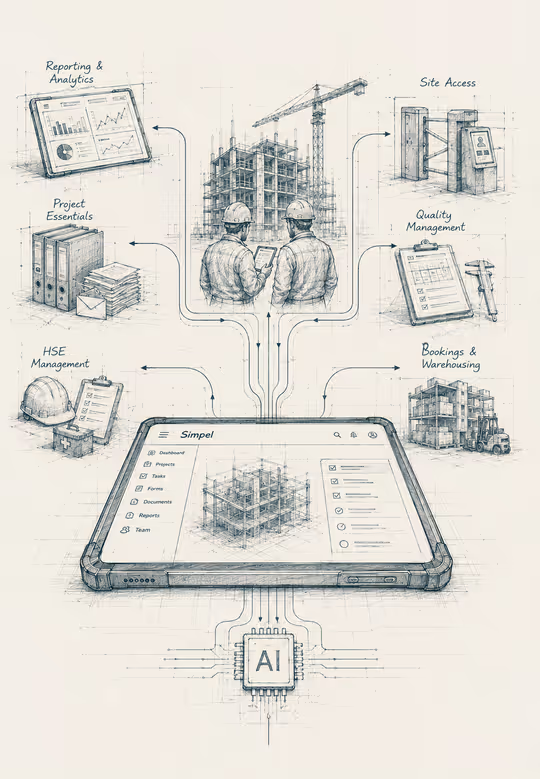
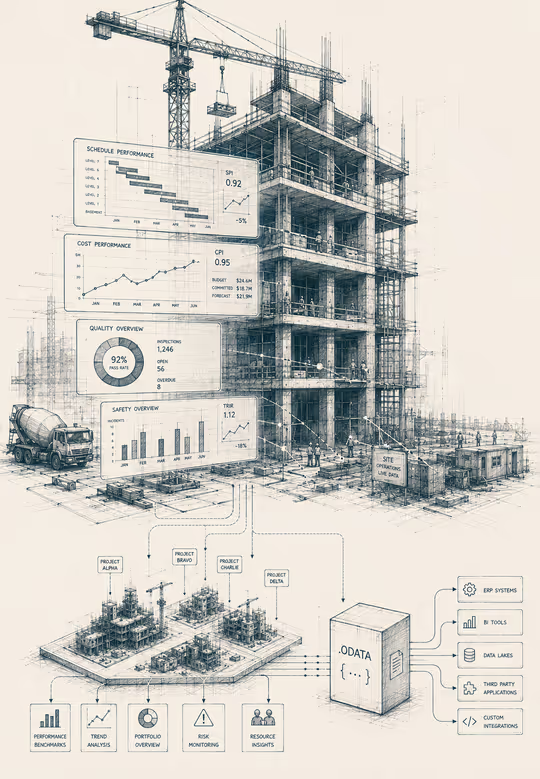
Reporting & Analytics supports precise, informed decision-making by automatically consolidating project and organisational data to create a live thread of interactive information.


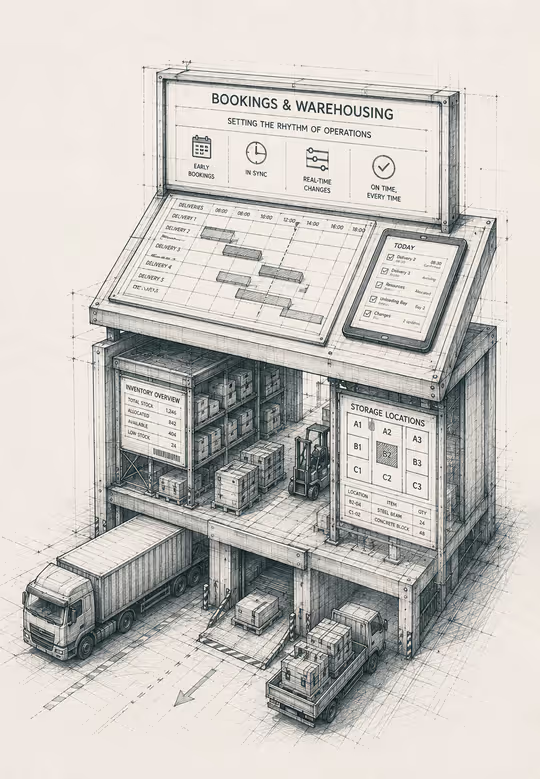
Bookings & Warehousing replaces the whiteboard, setting the rhythm of operations across resources, deliveries, and storage, keeping everything in sync from early bookings to last minute changes.


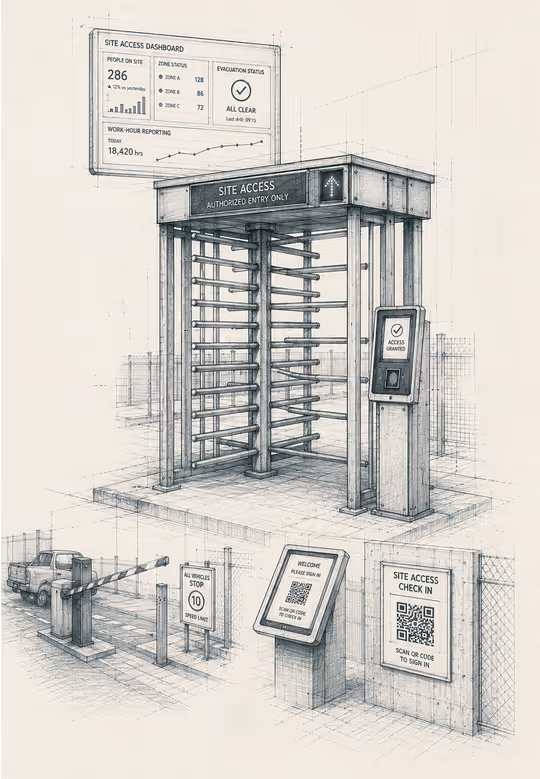
SIMPEL’S proprietary site access hardware and software, developed as one cohesive system, mitigates the hazard of unknown, untrained, and non-compliant workers entering sites.


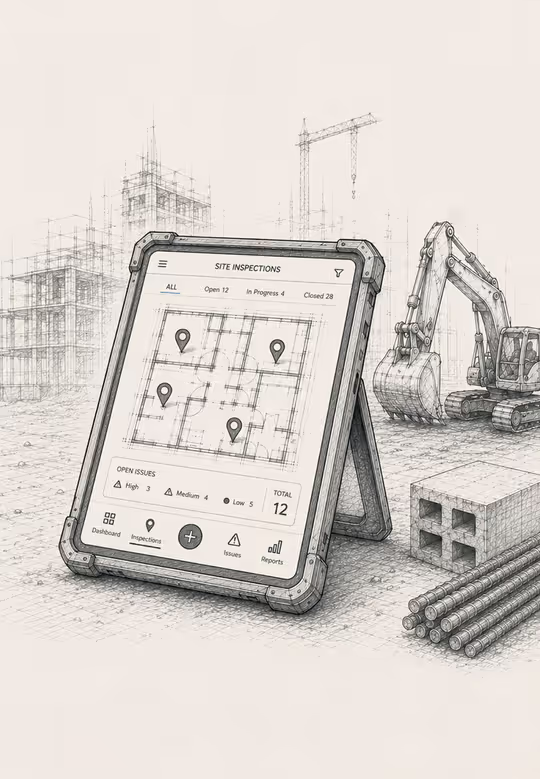
Quality Management drives QA processes, using dynamic forms and workflows to manage audits, defects, and tasks, ensuring required actions are captured and addressed as they arise.


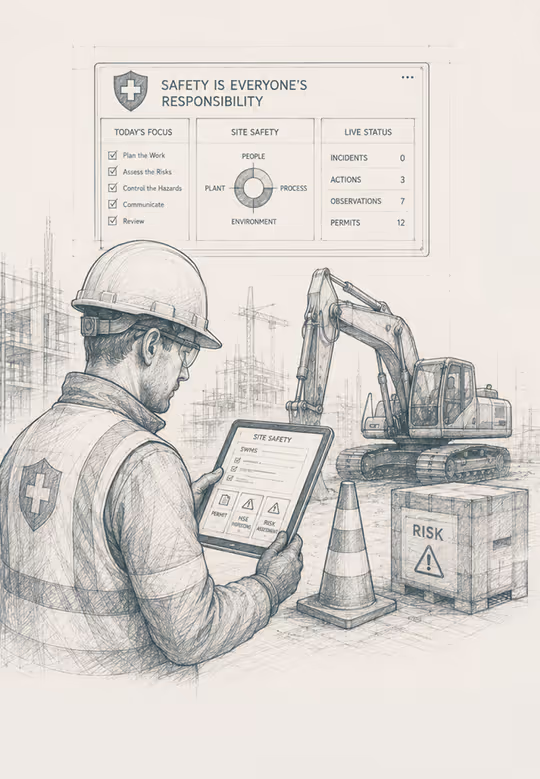
This suite centralises safety processes to keep every site protected and compliant, putting the right tools in the hands of the people who need them most and supporting safe, well-coordinated worksites.


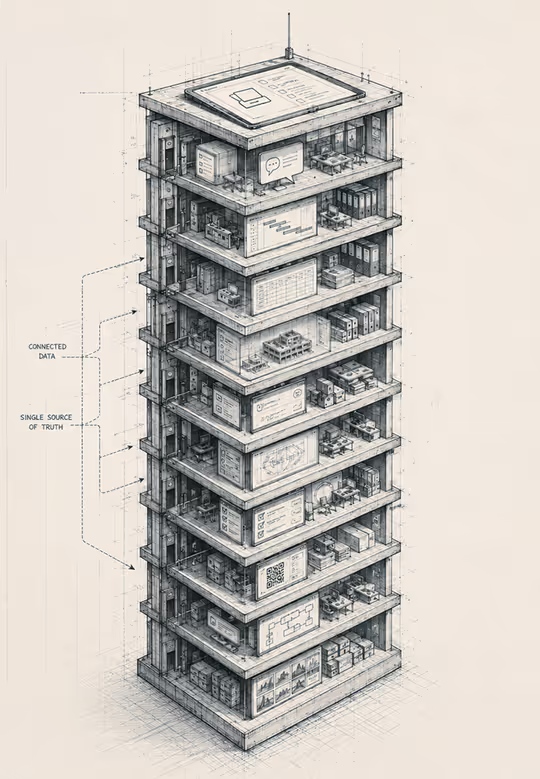
Project Essentials centralises the core tools needed for delivery, unifying documents, data, and communications into one place so there’s always a clear view of what’s happening and what needs to be done next.


_Project%2520Essentials.svg)


