
Ebony Middleton | Published on 4 March 2026

Technology decisions in construction are often made under pressure. Tools are needed to solve immediate challenges, but budgets are tight and focus naturally turns to licence prices. What’s often left out is the real construction management software costs, the ones that extend far beyond what shows up on the invoice.
How point solutions start to stack up
It usually starts with a problem that needs fixing quickly:
- Too many missing or outdated drawings, permits, site diaries etc.
- A spreadsheet tracking variations or approvals that only one person maintains
- A scheduling whiteboard that hasn’t been updated since last week
So, a new tool is introduced to plug the gaps, and for a while, it does.
Then, another problem surfaces.
Before long, the business isn’t paying for one solution. It’s managing five.
The Four Cost Layers of Construction Management Software
Every app, every platform, and every open tab shapes how work is coordinated, how information moves, and how decisions get made. Licence fees are the most visible component, but the true cost of construction management software extends across four distinct layers: software costs, operational costs, security costs, and opportunity costs. Each compounds differently over time, and together they reveal the price difference of point solutions and unified platforms.

Layer 1: Software Costs
The cost impact of managing multiple software vendors
Every vendor added to the stack brings its own contract, support model, and integration requirement. As that stack grows, so does the complexity of managing it. When software selection becomes more deliberate, that complexity reduces and total cost becomes easier to understand and manage.
In practice, that looks like:
- All users covered under a single licence
- One platform governing all operational activities
- Onboarding and training contained to one system
- Reduced reliance on third-party support
Individually, each of these structural decisions simplifies day-to-day operations. Together, they shape how predictable and controllable construction management software costs remain over time.

Layer 2: Operational Costs
Continuous data flow is essential for long-term value
Construction thrives on accurate, timely information. But too often, crucial information passes through multiple hands and systems before reaching its destination.
The operational drag created by disconnected systems is easy to underestimate. Ten minutes of data re-entry, tool switching, or duplicate administration per worker per day compounds quickly. The antidote is removing the friction at the source. When information moves automatically between steps, nothing gets lost in transit. Documents, tasks, and actions stay connected throughout.
In practice, that looks like:
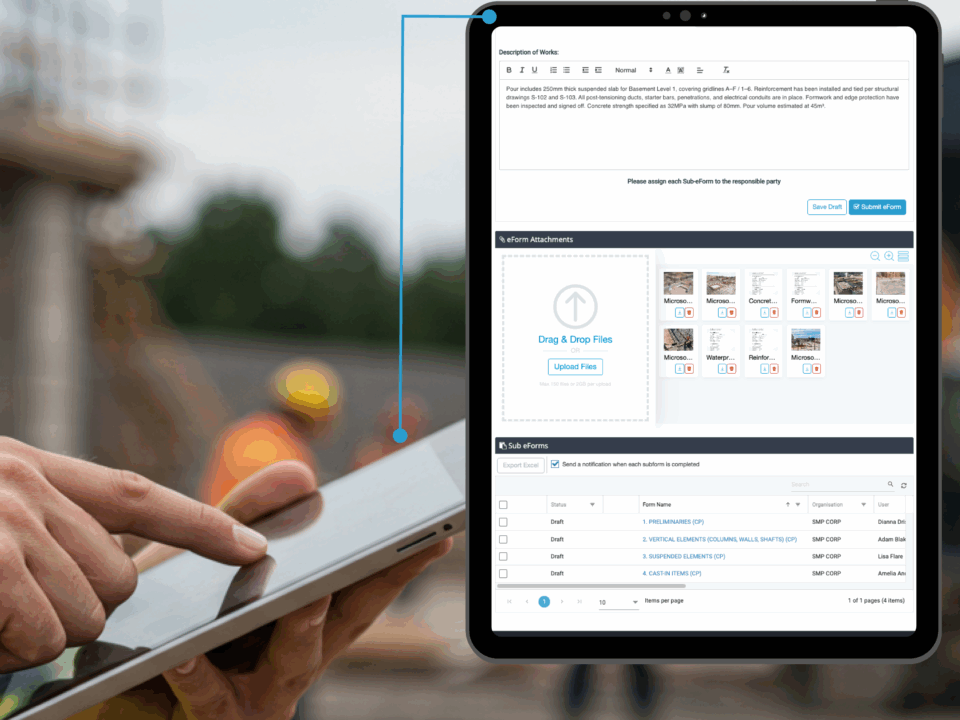
- Documents are uploaded, reviewed, and distributed within the same connected process
- Updates in one area are automatically reflected in the corresponding registers and tasks
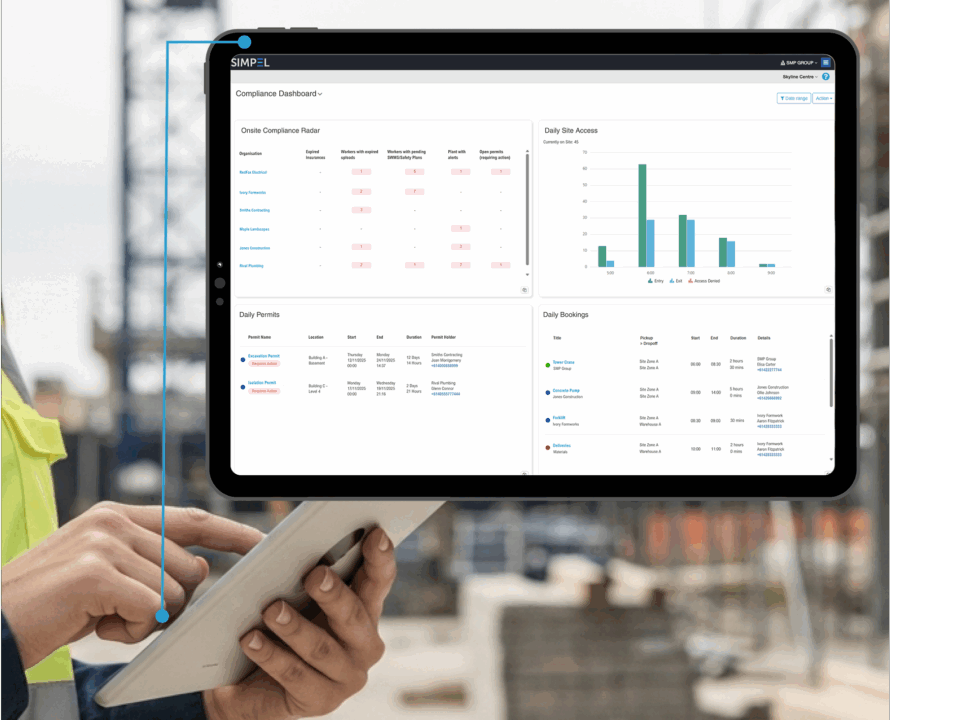
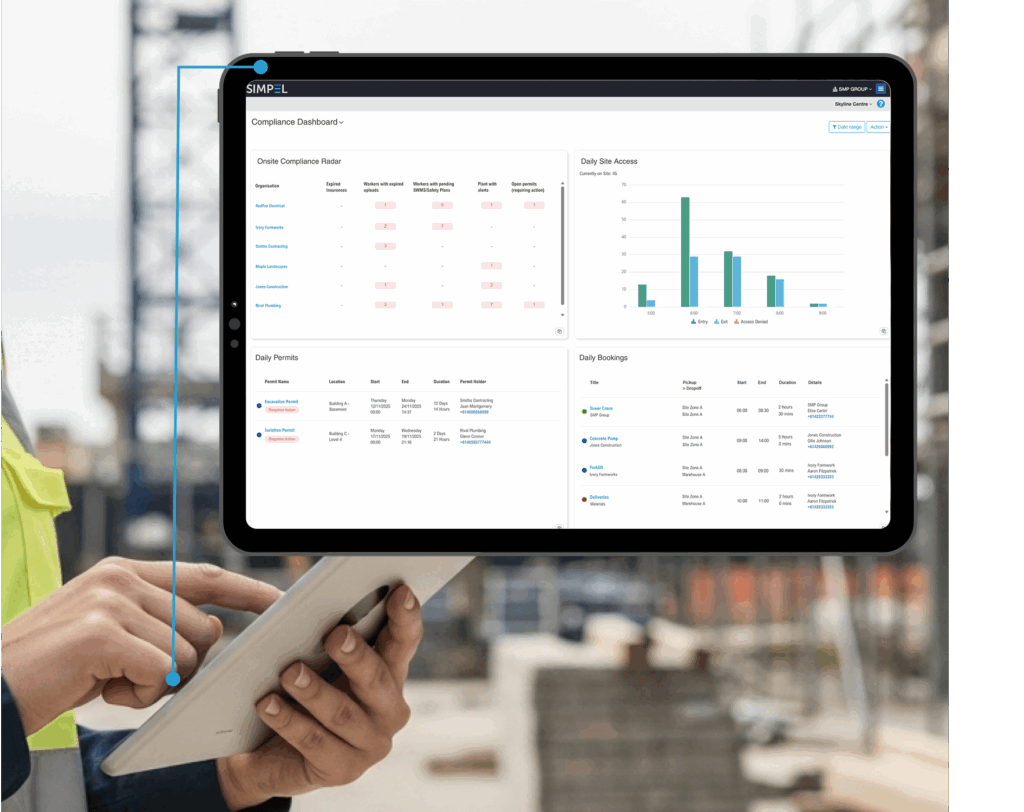
- Real-time dashboards surface information that can be acted on immediately
Information remains connected and accessible, reducing the need for repeated validation. Effort shifts from managing data movement to progressing the work itself, reducing rework, delays, and the broader cost impact of misaligned information.

Layer 3: Security Costs
Software structure influences ongoing security
Protecting project information has become increasingly important as regulatory expectations continue to tighten. When multiple systems are in use, authentication, access controls, and oversight sit across separate platforms, each with its own login structures, permission settings, and integration points.
As those systems expand, so does the administrative effort, with credentials managed, access rules maintained, and integrations monitored across separate systems.
Consolidating systems reduces complexity and strengthens security through consistent controls, including:
- Single Sign-On
- Multi-Factor Authentication
- Role-based access controls
Fewer moving parts mean stronger, more consistent protection for sensitive data. Security improves without adding resources or administrative overhead, lowering the likelihood of incidents that carry financial and reputational consequences.

Layer 4: Opportunity Costs
Assessing readiness for future technology
Artificial intelligence, predictive analytics, and advanced automation are no longer distant ideas. They’re already shaping how construction organisations plan work, monitor risk, and assess performance. But their value depends entirely on the data feeding them.
When data is structured, consistent, and complete, it becomes usable beyond its original purpose, creating opportunities to:
- Identify trends and patterns across projects
- Automate reporting with accurate data
- Adopt emerging technology like AI without reworking data models or searching for missing data
The cost appears in delayed adoption, slower decision cycles, and the inability to capitalise on tools that competitors are already leveraging. What starts as a decision to simplify today’s workflows becomes an investment in what’s possible tomorrow, protecting the organisation from falling behind as digital capability accelerates across the industry.
Visibility as a competitive advantage
Construction performance is measured by delivery. The ability to see emerging issues early and respond decisively keeps projects on track and protects margins.
Visibility at an organisational level provides that control. It allows leadership teams to monitor patterns across projects, identify cost pressure before it escalates, and allocate resources where they're needed most.
That visibility supports:
- Both project and organisational level insights
- Early identification of delivery and cost risks
- More accurate forecasting and reporting
Clients receive predictable delivery and fewer surprises. Internally, the impact is measured in reduced rework, fewer delays, and stronger cost control.
These are returns that won't appear on a licence invoice, but they are precisely what determines whether a software investment delivers long-term value.
Point Solutions vs Unified Platforms: What the Cost Layers Reveal
Construction organisations generally arrive at one of two operational technology approaches. Point solutions offer a practical entry point, allowing organisations to address specific challenges without a full-scale system overhaul. A unified platform consolidates those functions into a single connected environment, where data flows across modules without manual intervention. Neither is inherently wrong, and suitability depends on an organisation's size, maturity, and strategic direction. Understanding how each performs across the four cost layers is what makes the difference between the right decision and an expensive one.
Looking beyond the immediate to long-term value
Licence costs are easy to calculate. But across the four layers, software, operational, security, and opportunity, the real cost of construction management software decisions becomes clear. When system structure supports these fundamentals, complexity reduces, decision-making improves, and growth doesn't require constant reinvestment in new tools.
Download Simpel's Construction Software Playbook for a side-by-side comparison of both approaches and a clearer view of what construction management software costs look like in practice.
Frequently Asked Questions

Sign up to Simpel's Newsletter
A quick read with our latest news, blogs, recent software releases, and big company updates