Change is Overdue: Improving Safety in the UK’s Deadliest Industry
New research from Astutis has confirmed what the industry has known for years: construction is a dangerous sector to work in. The data also shows it’s not getting better. In 2015, there were 35 fatal injuries recorded in the UK. A decade later, in 2025, the number is the same. For an industry that’s spent that decade embracing technology, adjusting to tighter regulations, and running stricter sites, the lack of improvement is highlighting the need for further reflection.
The data tells one story, the sites tell another
A static fatality count doesn't tell the whole story of construction safety performance, but it's the most unambiguous measure available, and highlights a clear gap between construction and other high-risk industries.
The top three most fatal industries in 2024/25 make for uncomfortable reading:
- Construction: 35 fatalities
- Agriculture, forestry and fishing: 23 fatalities
- Transportation and storage: 15 fatalities
Both agriculture and transport carry serious physical risk, yet both post lower numbers than construction. That difference raises a more important question about where and how those risks are being managed. For example, falls from height remain one of the most persistent and well-understood causes of fatal injury in construction. Yet its persistence points to something more stubborn than a knowledge problem.
On site, that problem rarely comes down to a single failure. Instead, it points towards something more systemic: multiple moving parts, changing workforces, tight programmes, and processes that don’t always translate cleanly from paper into practice.
Whether inductions have taken place, whether certifications are current, whether RAMS have been signed and approved: those aren't questions that answer themselves. Fragmented information might not cause accidents, but it doesn't help prevent them either. That's true of falls from height, and it's true of every other risk that keeps appearing in the data year after year.
The stakes have risen, but operational reality hasn't caught up
The commercial pressure bearing down on UK construction sites has intensified considerably in recent years. At the same time, the post-Building Safety Act landscape has raised accountability and scrutiny across the supply chain, increasing the pressure on how projects are managed. Add to that projects that are more complex, timelines that are tighter, and workforces that are being asked to deliver more, faster and you've got an industry carrying more risk, more accountability, and less margin for error than ever before.
When sustained pressure becomes the norm, the conditions for mistakes aren't far behind. Most sites have the processes. The harder truth is whether those processes are consistently followed.
This isn't about blame. When programmes slip and workforces are stretched, the reality of what's happening on site can drift from what's been planned and documented from a compliance stand point, often without anyone realising until it's too late. That disconnect, between what the paperwork says and what's actually happening on the ground, is where better operational oversight has a real role to play.
Data and visibility: part of the missing piece
If the biggest risks are already known, the harder part isn't what the industry should be watching for, but whether it can consistently see what's actually happening across fragmented, fast-moving sites.
In that context, keeping an accurate picture of what's actually happening on site is a genuine challenge, and one that often sits low on the list of priorities until something goes wrong.
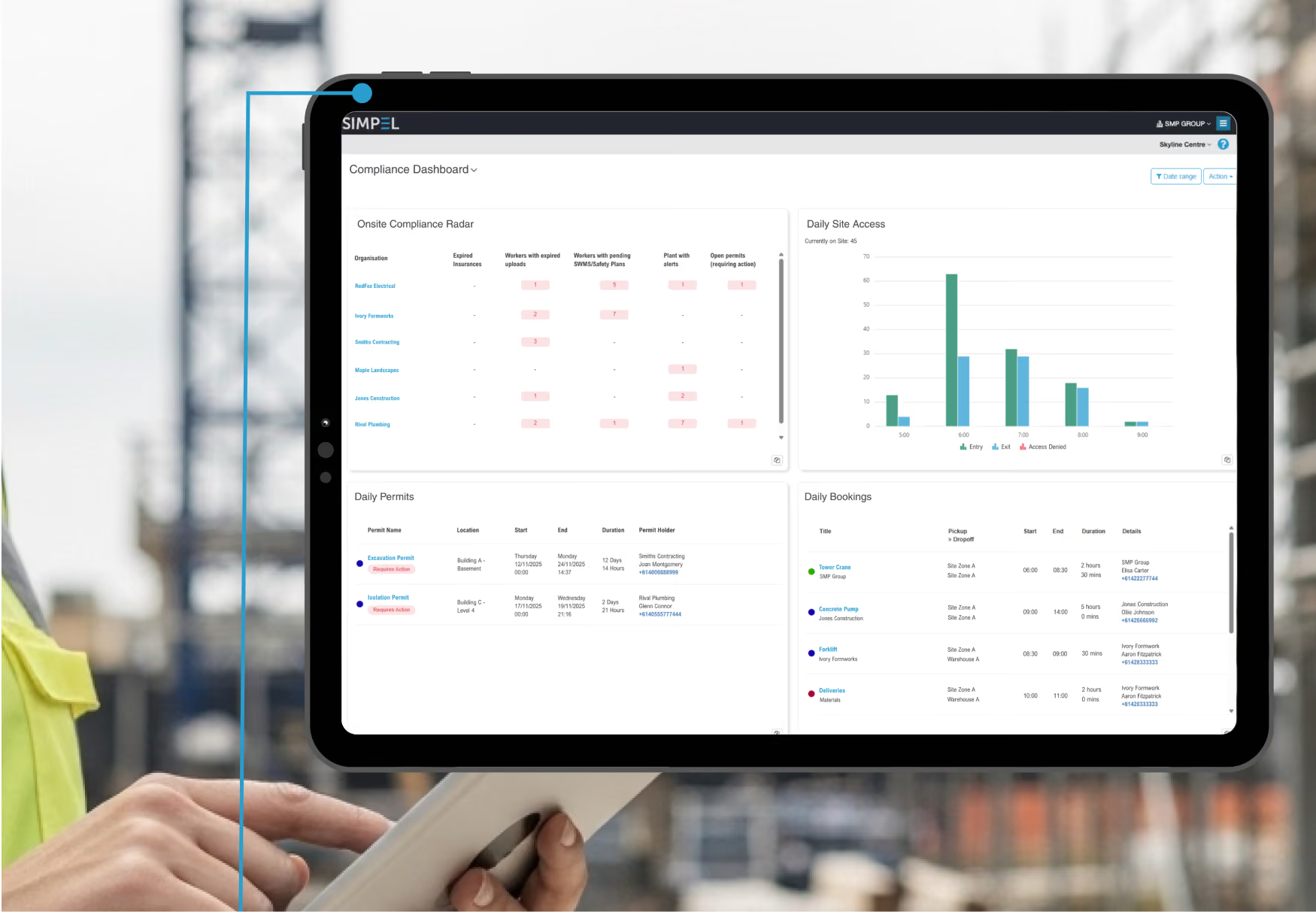
Safety data that lives on paper, in spreadsheets, or in systems that don't talk to each other doesn't disappear. It just becomes harder to act on. In practice, that looks like:
- Near misses that get logged but never reviewed
- Permits and RAMS that exist on paper but aren't visible to everyone who needs them
- Induction and certification records that have to be chased rather than checked
The tools and disciplines needed to manage construction safety data more effectively already exist. The difference in result comes down to how widely a system is adopted and whether safety information can be relied on and acted on day to day. That, in turn, depends on whether those systems fit into how sites actually operate, rather than adding another layer to manage.
Progress is possible. But it requires more than good intentions.
The data doesn't point to an industry that isn't trying. It points to one where the pressure, the fragmentation, and the breakdowns in how safety information flows have outpaced the systems meant to manage them. That's a solvable problem.
Addressing it means being honest about where those gaps actually sit:
- Operational Pressure: The industry is operating under more scrutiny, more accountability, and more complexity than ever before. How construction safety is managed needs to reflect that reality, not run parallel to it.
- Coordination: With self-employed workers and subcontractors making up a significant portion of the construction workforce, knowing who is on site, what they've been briefed on, and where visibility is limited is a structural challenge that the industry hasn't fully resolved.
- Data: The difference between safety information being useful and it being noise comes down to whether it's accessible, unified, and actionable, and whether the industry treats the technology that supports it as essential infrastructure rather than a nice-to-have.
None of this is straightforward, and none of it happens quickly. But the research is a useful prompt for the industry to look at its own sites honestly and ask whether the systems, behaviours, and culture in place are genuinely fit for purpose, or whether they're designed primarily to satisfy a checklist.
Thirty-five deaths in 2015. Thirty-five in 2025. The industry can do better than that.
See what industry-leading safety management looks like

Sign up to Simpel's Newsletter
A quick read with our latest news, blogs, recent software releases, and big company updates